



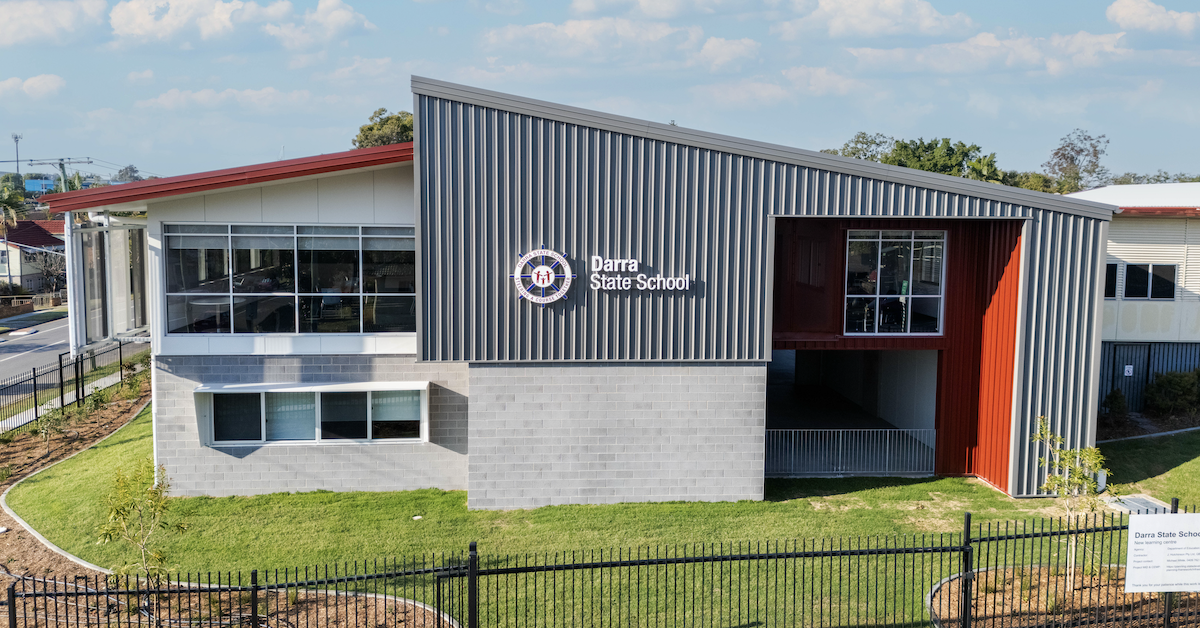
Respect, Safety and Resilience Shape Darra’s School Culture

Darra State School recorded a strong result in the Queensland Department of Education’s 2025 School Opinion Survey, with every staff member who responded agreeing that student behaviour was managed well.


The school was reported as one of five Brisbane state schools where staff agreement reached 100 per cent. The survey records confidence in behaviour management rather than counting classroom incidents, playground disputes or suspensions.

Public documents show a whole-school approach built around four expectations: respect, learning, safety and resilience.

Four expectations guide behaviour across the school

Darra State School uses Positive Behaviour for Learning (PBL) to support behaviour and learning throughout the school. The Student Code of Conduct encourages students to be respectful, be learners, be safe, and be resilient. These expectations apply to everyone in the school community and help staff and students discuss behaviour using a common language.

The framework also places positive behaviour teaching alongside responses to inappropriate behaviour. This means the school does not focus only on consequences after something goes wrong. Instead, students learn what the expectations look like in daily school life.

Darra’s PBL model includes different levels of support for students who need extra help. The school monitors student outcomes and provides additional learning or behaviour support to identified students. The framework becomes more personalised as needs increase, while families can also seek advice from teachers or the school’s guidance officer.
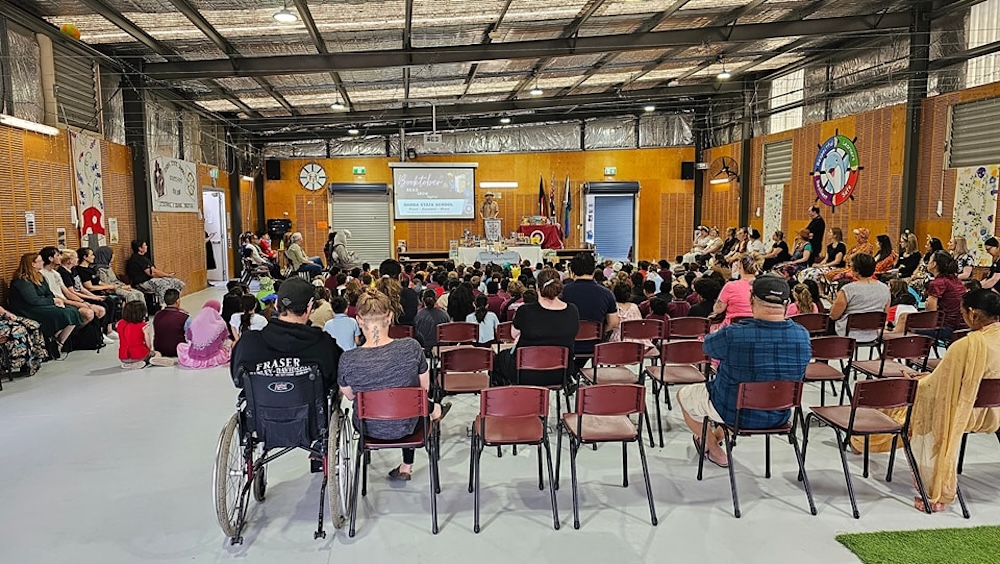
Photo Credit: Darra State School

Belonging shapes Darra’s wider message

Darra State School takes pride in its close, caring and multicultural school community. Its public values — trust, connect and grow — sit alongside a vision based on high expectations, inspired learning and belonging. 

Communication also matters in a diverse community. Darra’s Parent Handbook says translation assistance can be arranged for parent-teacher interviews when families need language support, giving parents a better chance to take part in discussions about their child’s learning, wellbeing and behaviour.

The Darra State School P&C Association gives families a formal role in school life. The group provides feedback on policies and activities, supports extra learning resources and encourages parents to take part in their children’s education. It also gives families a way to contribute ideas and become involved in school activities.

A strong result built on a clear framework

Darra’s survey result does not mean difficult behaviour never occurs. Yet, it shows that the staff who responded believed student behaviour was managed well. 


Respect, learning, safety and resilience sit alongside Darra’s focus on tiered support, consistent behaviour teaching and belonging. This gives the school a clear structure for responding when students need guidance or extra help.

Published 29-July-2026

The Students at Darra State School Have Something to Say to Veterans This Anzac Day

With red crayons and careful words, students at Darra State School are among 190 Queensland primary schools taking part in the RSL’s Postcards of Honour program ahead of Anzac Day, sending handwritten and hand-decorated cards directly to local veterans and serving Defence members.


For Year 5 student Van Reuben, the postcard he is making carries a meaning that goes beyond the classroom. His father served in the Australian Army in Afghanistan, and as Van draws poppies across his card, that personal history sits close to the surface.

“It makes me feel glad that he fought for all the people and for our country,” Van said. “Anzac Day is special to me because I get to commemorate all those people who fought for me and I get to commemorate my dad.”

Van is one of thousands of Queensland children for whom Anzac Day is not a distant chapter in a history book. For him, and for many of his classmates, it is something lived at home, at the dinner table, in the silences between stories. The Postcards of Honour program gives that feeling somewhere to go.

The Story Behind the Postcards

The choice of a postcard as the program’s centrepiece is not incidental. Throughout World War One, postcards were one of the primary means by which soldiers on the Western Front and at Gallipoli stayed connected to the people they had left behind. They carried drawings, brief messages and fragments of everyday life between the trenches and the families waiting at home, often the only tangible evidence that someone was still there.

Students of Darra State High thanks veterans this Anzac Day
Photo Credit: RSL Queensland

The RSL built Postcards of Honour around that history deliberately, asking students to participate in the same act of reaching across distance and uncertainty that defined communication for the Anzacs.

Now in its fourth year, the program has grown from its 2023 launch into one of the most widely adopted Anzac Day educational initiatives in Queensland, at various points reaching more than 270 schools and over 24,000 students across the state. This year, 190 Queensland schools are participating, with each school receiving a visit from a local RSL sub-branch volunteer who delivers a presentation about Anzac Day’s history and significance before students create their postcards.

The veterans then return for a show-and-tell once the cards are finished, and the postcards are hand-distributed to veterans and serving members in the community on or around Anzac Day.

A Soldier from Down the Road

Darra RSL Sub-Branch President Grant Hartigan is the veteran who visited Darra State School this year. He joined the Australian Army as an infantryman in 2014 and later deployed to Iraq, giving him a perspective on service that connects directly to the world Van Reuben and his classmates are learning about. Standing in front of a room of primary school students and explaining what that experience means is something Hartigan takes seriously, and what happens when veterans receive the finished postcards stays with him.

Photo Credit: RSL Queensland

“Seeing some of the veterans’ faces when they receive these postcards is just indescribable,” he said. “Especially when they realise kids from the local school were thankful for older Australians and veteran service. It’s pretty touching.”

For Hartigan, the program does something that formal commemorations alone cannot: it creates a two-way exchange rather than a one-way ceremony. Students do not just observe Anzac Day, they participate in it, in a way that produces something real and personal for the person on the receiving end.

“It really gets engagement from the younger generation where they get an opportunity to show remembrance and also give a tangible token of gratitude to servicemen and women,” he said.

How It Changes the Way Students See Anzac Day

Darra State School Principal Tracy Freeman has watched what happens to students when a veteran like Hartigan walks into the room and speaks plainly about service, sacrifice and the weight of what Anzac Day represents. The shift in how students engage with the history, she says, is genuine.

“Listening to Grant really helps our children to connect with their feelings and empathise how the soldiers may have felt back in the Anzac period,” Freeman said. “The students are able to learn, they’re able to connect and they’re able to show gratitude to the servicemen before us, and it’s just across generations.”

That phrase, across generations, is the thread running through everything the program does. Darra is a suburb that holds multiple generations of families, many of them with direct connections to military service across different conflicts and different countries. In a classroom like Van’s, the history of Anzac Day is not one single story but many, and the Postcards of Honour program makes space for all of them.

Schools and RSL sub-branches interested in taking part in future years of the program can find out more here. Darra’s Anzac Day Dawn Service takes place at the Darra RSL Sub-Branch on 25 April.


Published 24-April-2026