



Riverhills: Among Least Downsizeable Brisbane Suburbs

According to a new housing index, 18 suburbs, including Riverhills, emerged as the least “downsizeable” Brisbane suburbs. The report was released as the Council’s ongoing public consultation on the proposal to ban townhouses in single-home areas is set to wrap up in 26 August 2019.

The DORIS Index or “Downsizer Opportunity to Remain in Suburb” by Place Design Group, ranks Brisbane suburbs according to how easy or difficult it is to downsize into. 

The housing index underscores downsizing as “an important piece of the housing market puzzle” and why people, especially the ageing population, should have the option to live “in their residence of choice, for as long as they are able to, as they age,”  or what it referred to as “aging in place.”

By measuring the number of new non-single house development approvals and the population of people aged 55-64 in each suburb, the analysis brings to light the possible challenges that the ageing population would face in finding age-specific housing to move into that is in the same suburb or somewhere closer to where they live in.

“DORIS was presented as an accurate representation of a typical +55 year old who in hindsight realises she didn’t do herself any favours all those years ago, when she joined the campaign against townhouses and low-medium density development in the inner city suburb that she’s lived in her whole life,” Analyst Chris Isles of Place Design Group said.

Last 3 years average of building approvals for non-detached houses, from 0 (lightest green) to 685 (darkest green) | Photo Credit: Place Group Design/placedesigngroup.com
Proportion of households in each suburb that are 55-64 years old, from 0% (Yellow) to 25% (Red) | Photo Credit: Place Group Design/placedesigngroup.com
The Doris Index – Suburb ranking, with 1 (lightest red) being the easiest to downsize and 8 (darkest red) the hardest | Photo Credit: Place Group Design/placedesigngroup.com

The 18 Most “Downsizeable” Brisbane Suburbs according to the Place Design Group’s DORIS Index:

  1. South Brisbane
  2. Fortitude Valley
  3. Woolloongabba
  4. West End
  5. Kangaroo Point
  6. Newstead
  7. Cannon Hill
  8. Greenslopes
  9. Upper Mount Gravatt
  10. Brisbane City
  11. Albion
  12. Ascot
  13. Toowong
  14. Nundah
  15. Chermside
  16. Sherwood
  17. Windsor
  18. Bulimba

The 18 Least “Downsizeable” Brisbane Suburbs according to the Place Design Group’s DORIS Index:

  1. Wishart
  2. Ferny Grove
  3. Bellbowrie – Moggill
  4. Belmont – Gumdale
  5. Middle Park – Jamboree Heights
  6. Jindalee – Mount Ommaney
  7. Mansfield
  8. Chelmer – Graceville
  9. Bald Hills
  10. Wakerley
  11. Westlake
  12. Pullenvale
  13. Tarragindi
  14. Riverhills
  15. Deagon
  16. Fig Tree Pocket
  17. Geebung
  18. Robertson

Recent findings of Australian Housing and Urban Research Institute (AHURI) on the housing aspirations of older Australians over the age of 55, stated that the demand for attached dwellings, such as terraces and townhouses, increases with age whilst preference for detached houses decreases as people get older.

“Older Australians aspire to live in a variety of different locations, with the most popular choices being the middle to outer suburbs of capital cities (around 35%) and small regional towns (around 20%). Generally, they would like to own a detached dwelling (69%) with three bedrooms (50%) although there is an appetite for two-bedroom apartments, particularly in the 75+ age group,” the AHURI report said.

The research said that there is an unmet demand for smaller dwellings and that current patterns of housing supply focus on large separate dwellings and too many apartments but not enough mid-sized product.
Photo Credit: Brisbane City Council / Facebook

The DORIS Index report suggests policy makers to undertake a targeted review of the suburbs named as having low downsizeability, as well as review the amount of land that are appropriately zoned for the delivery of missing middle typologies — a compromise between larger, single detached homes and higher density apartments.

“There needs to be a way to deliver the “gentle” density which could be a mix of sporadic smaller lots, single unit dwellings, granny flats, or dual occupancies,” the  DORIS Index report said.

“These dwellings need to be designed with older Australians in mind, which includes being easily adaptable when required,” the AHURI report said.


Latest Land Valuations Show Centenary Suburbs’ Median Land Value Increased

Land values in the Brisbane City Council area increased by 6.8 percent overall since the last valuation in 2017. This overall land value increase is also reflected on Centenary suburbs, notably Jindalee and Sinnamon Park, according to the latest land valuation report published by the State of Queensland.

The latest land valuations report shows median land value in Jindalee increased 20.7 percent to $350,000 and Sinnamon Park’s climbed 20 percent to $420,000. Other Centenary suburbs also recorded moderate median land value increase: Mount Ommaney – $590,000 (9.3%), Middle Park – $365,000 (10.6%), Jamboree Heights –  $350,000 (9.4%), Westlake – $410,000 (5.1%), Riverhills – 305,000 (10.9%), Sumner – $255,000 (10.9%), and Seventeen Mile Rocks – $340,000 (9.7%).

Queensland property is showing continued signs of strength in some areas, according to the recently released Valuer-General’s 2019 Property Market Movement Report. Based on the economic indicators, Queensland Treasury advise “dwelling investment in Queensland is entering a ‘recovery phase.’” This follows a 4.8 percent decline in 2017-2018, Queensland’s Valuer-General Neil Bray said.

“While approvals and construction have declined, the substantial amount of work remaining in the pipeline indicates dwelling investment is headed for a ‘soft landing’ compared with previous housing cycles,” he said

A total of 18 local government areas, representing 1.03 million properties, received new valuations this year: Brisbane, Burdekin, Cairns, Etheridge, Gympie, Ipswich, Lockyer Valley, Logan, Longreach, Moreton Bay, Noosa, North Burnett, Redland, Somerset, South Burnett, Sunshine Coast, Weipa, and Western Downs.

Of the 18 local government areas that have been valued, 16 recorded an overall increase ranging between 4.9 (South Burnett) and 42.5 percent (Etheridge). There were nine LGAs with increases of 0-10 percent, five areas with increases of 10-20 percent, and two areas with more than 20 percent increases. Burdekin and Longreach, on the other hand, recorded overall decreases of 2.9 percent and 14.8 percent, respectively.

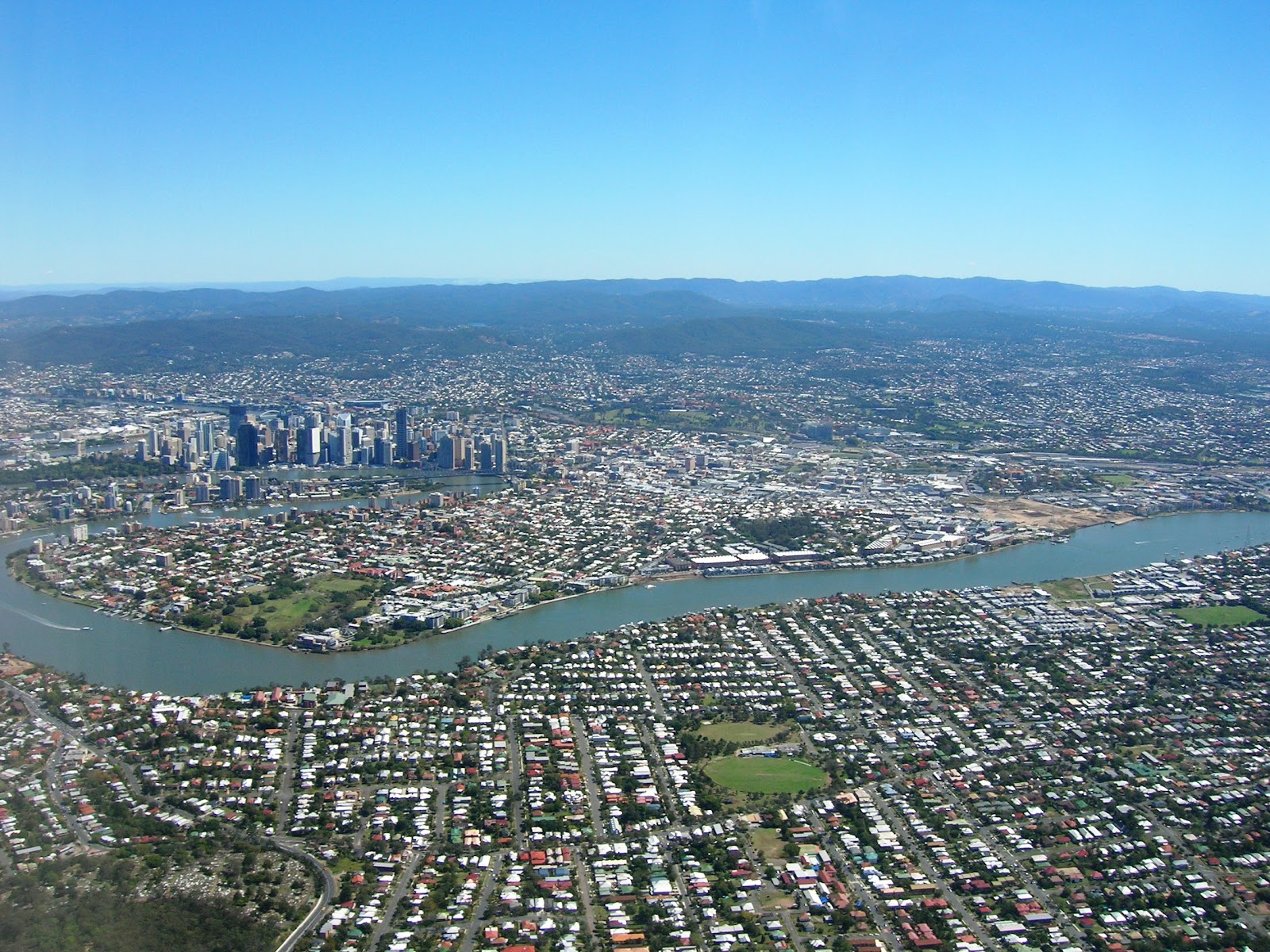
Photo Credit: J Brew [CC BY-SA 2.0 (https://creativecommons.org/licenses/by-sa/2.0)] / Wikimedia Commons

Majority of suburbs across Brisbane have recorded increase in residential land values, with most showing increases between five and 15 percent. Residential sector is the largest market sector in Brisbane, about 304,000 valuation. The median residential value has risen 7.1 percent as the overall median value increased to $455,000 from $425,000.

Thirty-seven residential suburbs remained unchanged, whilst 126 increased by up to 15 percent and 16 suburbs increased by more than 15 percent. Inner-city suburbs Woolloongabba (26.1%), Auchenflower (19.6%), Paddington (19.4%), and Milton (19.2%) have the largest median valuation increases.

The new valuations will become effective 30 June, however, landowners who have additional or new evidence to justify the need to alter the new valuations should provide such information through the online objections process via www.qld.gov.au/landvaluation or at the address shown at the top of their valuation notice, by 7 May 2019.


New Childcare Centre Proposed for Riverhills

Council is now assessing a development application for a new childcare centre proposed for 1 and 3 Hazelton Street, Riverhills.

The proposal seeks to develop a two-storey childcare development centre at a low-density residential zone. The developer will remove two houses on-site as part of their development plans.

Perspective from Hazelton Street corner. Photo credit: Brisbane Planning and Development Online

The proposed childcare centre will cater to 104 children and includes three outdoor play areas as well as 21 car park spaces. It also aims to open from 6:00 a.m. to 7:00 p.m. Monday to Friday.


Local Residents Unhappy

The proposal is already making a few residents unhappy since the childcare centre’s location raises traffic and safety issues.

Residents claimed that the development application’s traffic report is somehow inaccurate since there are multiple errors in the document including the speed limits on the intersection.

Perspective from Sumners Road corner. Photo credit: Brisbane Planning and Development Online

One resident is particularly concerned about the underground carpark’s access to Sumner’s Road. In the submission, the local resident said that  the location considered dangerous. This is due to the fact that there have been many accidents in the area and in some cases, cars have landed in the front yard of 1 Hazelton Street, Riverhills.

“This area is a well-known trouble spot to council. The front yard of 1 Hazelton Street is earmarked as an outdoor play area.  I certainly would feel uncomfortable placing my children there knowing the history of the traffic incidents.”

Another Riverhills resident cited that the childcare centre is not necessary for the area since there are already several childcare facilities in the area.

Photo credit: Brisbane Planning and Development Online

With these reactions, it seems that the childcare centre will not be supported by the local community.

Learn more about the proposed new childcare centre in Riverhills by reading the Application Details for A005035700.


Riverhills to Spring Hill Is One of The Worst Bus Routes in Brisbane

The worst bus routes in Brisbane have been revealed and the ones that are perennially late in the west use the Centenary Motorway, such as the Riverhills to Spring Hill route and the Mount Ommaney to Queen St, CBD route.

The Brisbane City Council enumerated these late routes:

  • P457 – Riverhills to Spring Hill
  • P456 – Mount Ommaney to Queen St., CBD
  • P458 – Fig Tree Pocket to Queen St., CBD
  • P426 – Kenmore Hills to Queen St., CBD

The council realises that one of the main reasons why these routes arrive late is because of the traffic congestion on the Centenary Motorway. The motorway has long been the topic of discussion and there have been plenty of proposals for its upgrade, yet the peak hours remain horrible.

In April of this year, RACQ named it the slowest motorway during the morning and afternoon journeys. Their findings showed that speed in the am is approximately at 22km/h and 26km/h in the afternoon.

Because the said motorway is under the State Government, the Department of Main Roads and Transport responded to this and said that the Master Plan for Centenary Motorway (Toowong to Ipswich) is already being prepared and will be ready early next year. It will include all recommendations to improve the traffic flow on the motorway.

As of now, the council redirects buses through the Legacy Way and has been providing bus upgrades on the Inner City Bypass to improve bus services on key peak hour routes here in the west.

Riverhills Still Wants a Bridge to Bellbowrie According to Recent RACQ Survey Results

Last month, RACQ launched a survey regarding the bridges that must be built around Brisbane. They proposed 12 new direct river crossings, three-stage projects and duplication of existing bridge crossings. Should these be accepted, there will be new links between suburbs such as West End, Moggill, the CBD, New Farm, Kangaroo Point, and Hawthorne.


Ten More Bridges

Photo credit: http://bellbowrieriverhillsbridge.weebly.com/

The results of the survey have been released and it shows residents want ten more bridges to be built. One of them is a bridge connecting Bellbowrie and Riverhills. Talks between residents about this bridge have been going around since 2013 and it seems like they still want the bridge to happen.


Green Bridge or Road Bridge?

The bridge links Sumners Road at Riverhills and Birkin Road at Bellbowrie. This was originally planned in the mid-1970s but it did not push through because officials thought that the city was not developed enough for such a project, at the time. By 2009, the plan was to make that bridge a pedestrian or cycling link only. In 2013, a debate about turning it into a road bridge took place.

The plan to turn it into a road bridge is for Moggill and Bellbowrie residents to avoid traffic congestion on Moggill Road and to have access to a faster route on the way to their destination.


Sumners Road Ready For a Bridge


In Riverhills, the location of the proposed bridge is at the end of Sumners Road, which is currently a dead end now. However, it has a rich flora or large trees. It is quite far from the water. Should a bridge be approved, the road has to be widened and surfaced properly.

The Brisbane City Council had prepared the road already for a possible bridge due to the previous plans. Wider road lanes and cycling planes on Sumners Road can be observed to accommodate the possible increase in cars once a bridge is built.


The Struggle

The lack of a bridge between these two suburbs has greatly impacted the lives of the residents. Belbowrie residents traveling to Riverhills and other nearby suburbs complain about the long travel time. This also includes the amount of fuel that they consume and car emissions that pollute the atmosphere. Hence, a bridge between the suburbs will significantly cut travel time shorter and also prevent residents from getting stuck in traffic at the Centenary Motorway during peak hours.

Memories of the 2011 floods have underscored the need for a bridge to Riverhills. In 2011, Bellbowrie residents suffered from a lack of electricity and had limited food supplies for at least a week. A bridge to Riverhills would make it easier to evacuate to other areas during natural calamities.

Two bridge proposals were made, a green bridge and a road bridge. Residents seemed to favour a road bridge more than a green bridge. In 2016, an online petition was launched for a road bridge to be built between the two suburbs.


Taken Into Consideration

The RACQ Survey also recorded majority support for bridges to be built from West End to Toowong, Bulimba to Teneriffe, Balmoral to Hamilton, and Moggill Ferry Road to Riverview.

Paul Turner, the RACQ Spokesman said that these results only show that people are rooting for better infrastructure to battle Brisbane’s congestion problem. They also assured the community that they will be highlighting these results to the council and the state government to guarantee that feedback is included in future planning.