



Latest Land Valuations Show Centenary Suburbs’ Median Land Value Increased

Land values in the Brisbane City Council area increased by 6.8 percent overall since the last valuation in 2017. This overall land value increase is also reflected on Centenary suburbs, notably Jindalee and Sinnamon Park, according to the latest land valuation report published by the State of Queensland.

The latest land valuations report shows median land value in Jindalee increased 20.7 percent to $350,000 and Sinnamon Park’s climbed 20 percent to $420,000. Other Centenary suburbs also recorded moderate median land value increase: Mount Ommaney – $590,000 (9.3%), Middle Park – $365,000 (10.6%), Jamboree Heights –  $350,000 (9.4%), Westlake – $410,000 (5.1%), Riverhills – 305,000 (10.9%), Sumner – $255,000 (10.9%), and Seventeen Mile Rocks – $340,000 (9.7%).

Queensland property is showing continued signs of strength in some areas, according to the recently released Valuer-General’s 2019 Property Market Movement Report. Based on the economic indicators, Queensland Treasury advise “dwelling investment in Queensland is entering a ‘recovery phase.’” This follows a 4.8 percent decline in 2017-2018, Queensland’s Valuer-General Neil Bray said.

“While approvals and construction have declined, the substantial amount of work remaining in the pipeline indicates dwelling investment is headed for a ‘soft landing’ compared with previous housing cycles,” he said

A total of 18 local government areas, representing 1.03 million properties, received new valuations this year: Brisbane, Burdekin, Cairns, Etheridge, Gympie, Ipswich, Lockyer Valley, Logan, Longreach, Moreton Bay, Noosa, North Burnett, Redland, Somerset, South Burnett, Sunshine Coast, Weipa, and Western Downs.

Of the 18 local government areas that have been valued, 16 recorded an overall increase ranging between 4.9 (South Burnett) and 42.5 percent (Etheridge). There were nine LGAs with increases of 0-10 percent, five areas with increases of 10-20 percent, and two areas with more than 20 percent increases. Burdekin and Longreach, on the other hand, recorded overall decreases of 2.9 percent and 14.8 percent, respectively.
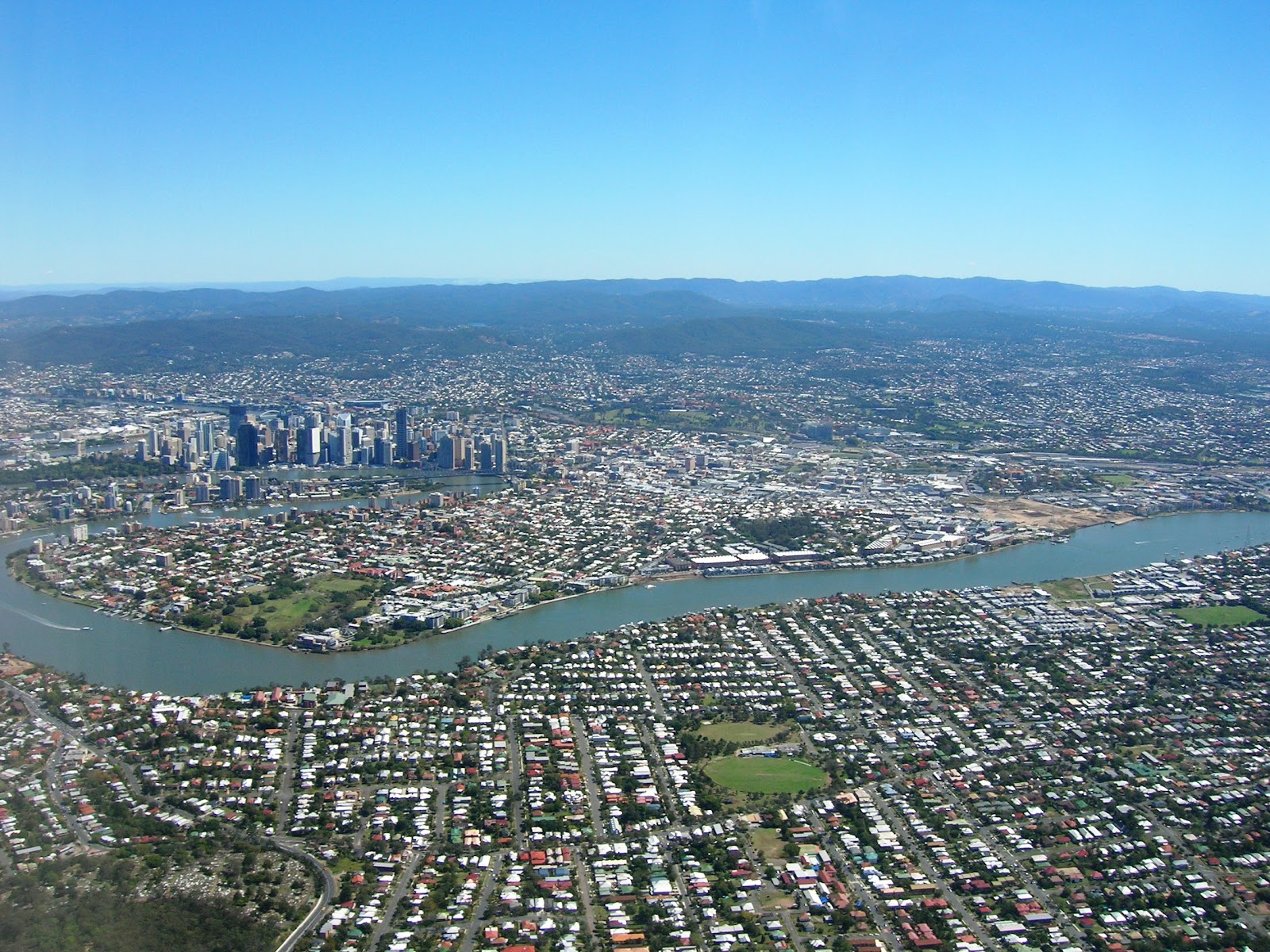
Photo Credit: J Brew [CC BY-SA 2.0 (https://creativecommons.org/licenses/by-sa/2.0)] / Wikimedia Commons

Majority of suburbs across Brisbane have recorded increase in residential land values, with most showing increases between five and 15 percent. Residential sector is the largest market sector in Brisbane, about 304,000 valuation. The median residential value has risen 7.1 percent as the overall median value increased to $455,000 from $425,000.

Thirty-seven residential suburbs remained unchanged, whilst 126 increased by up to 15 percent and 16 suburbs increased by more than 15 percent. Inner-city suburbs Woolloongabba (26.1%), Auchenflower (19.6%), Paddington (19.4%), and Milton (19.2%) have the largest median valuation increases.

The new valuations will become effective 30 June, however, landowners who have additional or new evidence to justify the need to alter the new valuations should provide such information through the online objections process via www.qld.gov.au/landvaluation or at the address shown at the top of their valuation notice, by 7 May 2019.


Thomas Macleod and the Birth of Queensland Aviation in Sinnamon Park

His name is a familiar to people in Sinnamon Park and the Centenary area. A street and a park are named after him. There is even a monument for him in Sinnamon Park so people will never forget his valuable contribution to aviation in Queensland.

Thomas Macleod may be prominent in the Centenary area, but what many probably don’t know is that he was instrumental in giving flight to aviation in Queensland. His historic flight happened on present-day Seventeen Mile Rocks Road in Sinnamon Park, near the monument created for him on Windermere Avenue.

Born on June 5, 1881, Macleod was an aviator, barrister, air force officer and defence forces personnel before he retired as a sheep grazier.

First Flight in Queensland

The historic flight on December 22, 1910 was reported by The Courier newspaper to be the first time a biplane glider rose from the ground in Queensland. On that day, Macleod became the first to fly a heavier-than-air biplane glider built in Queensland.

The gentle slopes in the area made it ideal for the flight. Macleod trained on a specially constructed machine and made some tentative flights. On December 22, 1910, after experimenting for a week on a full-sized monoplane, he did some practice to start from a rail of around 32 ft. With the help of two young boys, Cecil and Hercules Sinnamon, Macleod managed to rise before reaching the end of the rail.

After several glides, he flew to a height of 12-14 ft. The glider he used was built according to the Wright brothers’ pattern, except for some alterations, including receding wing tips.

People who watched and observed the experiments marked that day as the start of practical aviation in Queensland. One hundred years after, on December 18, 2010, the memorial at Sinnamon Park was dedicated to Thomas Macleod to celebrate his historic flights on that day.

Monument celebrating Major Thomas Macleod’s successful flight in 1910. (Photo credit: CDH/CSHSoc)

Contributions to Aviation

Macleod was instrumental in developing the field of aviation in Queensland. He formed the Queensland Volunteer Flying Civilians in 1914 where members were trained in the art of aerial warfare using a reconstructed Cauldron at Hemmant. He served in the Royal Flying Corps along with other members of the flying school.

Six months prior to his historic flight, Macleod helped form the first Aero Club in Queensland in June 1910. Following World War I, the club started flight training. In 1920, the government granted them license to carry passengers and do aerial work.

Queensland Aero Club was granted Royal Charter in 1935 and took on its present name, Royal Queensland Aero Club. The club conducted flight training in Queensland under contract with QANTAS, where Macleod was among the early directors.

One of his more important actions as director of QANTAS was to establish the airline’s involvement in the original Royal Flying Doctor Service. He was instrumental in providing an aircraft for the aeromedical organisation.

Macleod’s contribution to aviation in Queensland was immense and the monument dedicated to him serves to celebrate his feats. The next time you pass by Seventeen Mile Rocks or the Thomas Macleod monument, remember how this was where Queensland aviation first took flight.