UQ Research Maps an 11-Year Life Expectancy Divide Between Darra-Sumner and Inala-Richlands

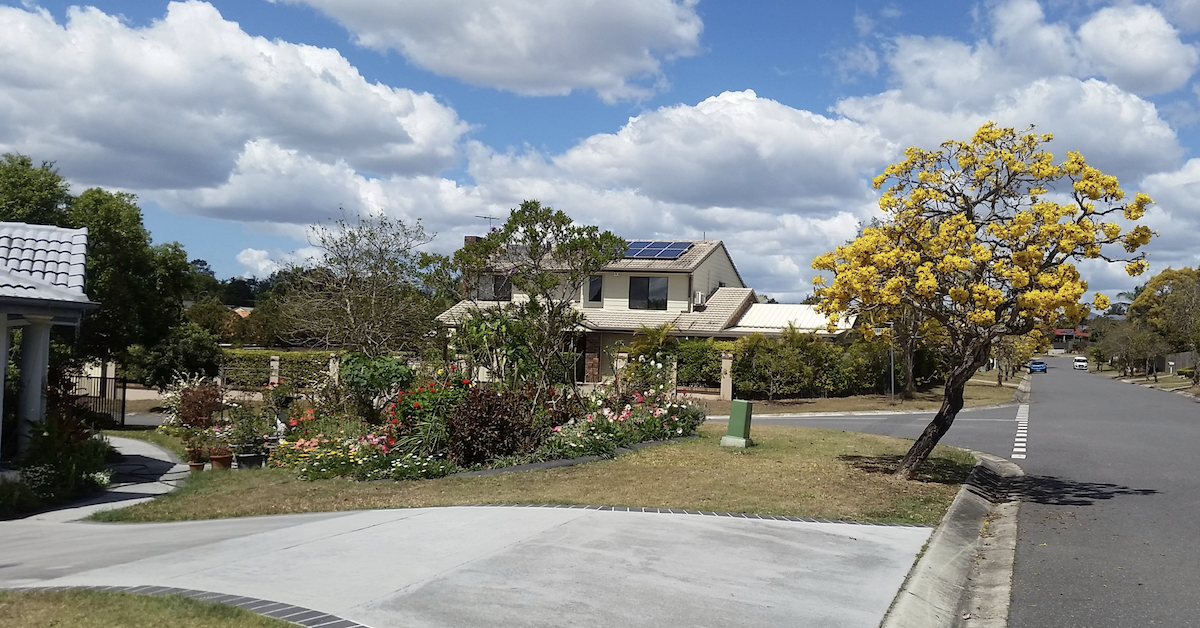
Men in Darra-Sumner are living more than a decade longer than men in Inala-Richlands — and for women, the divide is even greater — according to new University of Queensland research that has mapped health outcomes across Brisbane using the city’s suburban rail network.


Read: Life Begins at 60: Enjoying More of What Matters at Kingsford Terrace Corinda


The findings come from a study published in the Health Promotion Journal of Australia that overlaid median age of death statistics onto Queensland’s rail network to expose spatial inequalities in health. Rather than projecting future life expectancy, the research tracks median age of death, the actual age at which residents in a given area have passed away, an approach the research team noted gives planners and communities a practical reference point for understanding and acting on the findings.

For residents of the Centenary corridor and surrounds, the data points to a divide that sits uncomfortably close to home. Men in Darra-Sumner have a median age of death of 81 and women 86, while just down the road the figures tell a markedly different story. And how much of that difference comes down to structural and social factors rather than individual behaviour alone makes for sobering reading.

How the Study Worked

Photo credit: The University of Queensland

Associate Professor Jonathan Olsen from UQ’s Institute for Social Science Research led the study, using train stations as geographic markers to map health data across the state. The same method has previously been applied in Glasgow, London and New York.

Across Queensland, the median age of death for women ranges from 68 to 88, and for men from 60 to 83 — a statewide spread that sets the context for the sharper suburb-level contrasts the research identifies.

What the Data Shows for Darra-Sumner and Inala

Photo credit: The University of Queensland

The contrast between Darra-Sumner and Inala-Richlands is one of the more striking findings in the Brisbane dataset. Men in Inala-Richlands have a median age of death of 70 — 11 years below the figure for men in Darra-Sumner. Among women, the gap reaches 12 years, with Inala-Richlands recording 74 against Darra-Sumner’s 86.

Both Darra and Inala are well known for their multicultural communities and sit within Brisbane’s south-western suburbs. But the census data points to structural differences that the research links to health outcomes.

Inala has a higher proportion of Aboriginal and Torres Strait Islander residents than Darra. Indigenous Australians face significant and well-documented health disparities compared to non-Indigenous Australians — a disparity rooted in historical dispossession and ongoing systemic disadvantage, not culture or lifestyle. Inala residents also record lower average household incomes, and the suburb has higher rates of single-parent households, a factor the researchers identify as contributing to health disadvantage.

The Same Pattern Across the City

The Darra-Sumner and Inala-Richlands comparison sits within a broader pattern the research identified across Brisbane.

On the Cleveland line, women near Murarrie station had a median age of death 15 years lower than women near Cannon Hill, despite the two stations sitting just 1.6 kilometres apart. Census figures showed Murarrie had higher rates of divorce, unpaid care and female single-parent households — factors the researchers link to worse health outcomes for women.

On the Redcliffe Peninsula line, men near Zillmere station had a median age of death 10 years below that of men near Geebung, just a few stops away.

Why the Gaps Exist

Photo credit: The University of Queensland

Olsen said population health is shaped by a broad range of social, environmental, economic, cultural and commercial factors. Income, housing security, access to education and employment, nearby green space, and the availability of local services all shape health outcomes over a lifetime, he said.

Spatially referenced data, he noted, can guide place-based health initiatives such as upgrading parks and green space and expanding infrastructure for active travel — and those interventions work best when co-designed with the communities they serve.

What the Research Is Designed to Do

Olsen was clear that identifying specific areas at the harder end of the data is not about stigmatising communities. He said the aim was not to single out any suburb as having the worst health outcomes in Brisbane, but rather to draw attention to the variation in health outcomes between places in a way that could be acted on.

The goal is to give policymakers and health officials a detailed, location-specific picture of where need is greatest — and to make the case for targeted investment in upgraded parks, bike paths, and community health support.


Read: Life on the River Shapes Riverhills Rowing Community


Olsen added that the research also helps people recognise that even within inner-city Brisbane, suburbs sitting close together can have residents whose health outcomes differ considerably.

Published 3-March-2026

West Brisbane Sports Results Feb 20-22


 Sat, February 21, 2026 (Allianz Stadium) – A-League – Men – Round 18
• Sydney FC 1  |   Brisbane Roar FC 0

 Sun, February 22, 2026 (Spencer Park) – A-League – Women – Round 18
• Brisbane Roar FC 0  |   Adelaide United FC 2


Sat, February 21, 2026 (St Georges Park – St George Willawong FC – Field 1) – FQPL1 – Men – Round 1
• St George Willawong 1  |   Broadbeach United 5


Fri, February 20, 2026 (Bulimba Memorial Park – Southside Eagles FC – Field 1) – Kappa Pro Series – Women – Regional Round 1
• Southside Eagles 0  |   UQFC 0

Fri, February 20, 2026 (Walton Bridge Reserve – The Gap FC – Field 1) – Kappa Pro Series – Women – Regional Round 1
• The Gap FC 0  |   Logan Lightning 2


Sat, February 21, 2026 (Goodwin Park – Olympic FC – Field 1) – NPL – Men – Round 1
• Olympic FC 2  |   Lions FC 1

Sun, February 22, 2026 (Meakin Park – Field 1) – NPL – Men – Round 1
• Brisbane Roar B 1  |   Brisbane City 3

Sat, February 21, 2026 (Heath Park – Eastern Suburbs FC – Field 1) – NPL – Women – Round 3
• Eastern Suburbs 4  |   Brisbane City 2

Sat, February 21, 2026 (Goodwin Park – Olympic FC – Field 1) – NPL – Women – Round 3
• Olympic FC 0  |   Lions FC 0


Fri, February 20, 2026 (Brisbane Entertainment Centre) – NBL – Men – Round 22
• Brisbane Bullets 77  |   Sydney Kings 117


Sat, February 21, 2026 (The Gabba) – One Day Cup 2025-26 – Men – Match 6
• Queensland Bulls 260  |   South Australia Men 135

Sat, February 14, 2026 & Sat, February 21, 2026 (2 Day – Wep Harris Oval) – Queensland Premier Cricket – Men 1st Grade – Round 14
• University of Queensland Mens 1st Grade 6-251  |   Valley Mens 1st Grade 8-262


Sun, February 22, 2026 (Kerry Emery Oval – One Day) – Queensland Premier Cricket – Women 1st Grade – Round 21
• Sunshine Coast Womens 1st Grade 111  |   Valley Womens 1st Grade 9-235

Sat, February 14, 2026 & Sat, February 21, 2026 (2 Day – Trevor Hohns Field) – Queensland Premier Cricket – Men 1st Grade – Round 14
• Sandgate-Redcliffe Mens 1st Grade 6-322  |   Western Suburbs Mens 1st Grade 3-324

Parents Share Concerns About Rocks Riverside Park Water Play Surface

Rocks Riverside Park’s recently upgraded water play area has become a topic of community discussion, with some parents reporting injuries to their children whilst authorities maintain that the facility meets safety standards.


Read: Rocks Riverside Park Upgrade Shuts Days After Reopening


The water play area at the popular 26-hectare Seventeen Mile Rocks facility underwent a multi-million-dollar upgrade, with the 23-year-old installation being redesigned to improve functionality. The renovation was completed in time for the summer school holidays, welcoming families back to the riverside attraction.

Following the initial reopening, some parents shared photographs on social media showing their children with various injuries, including cuts, scrapes, and bruises. Several families commented about the surface being slippery, prompting concerns within the community.

Rocks Riverside Park
Photo credit: Tracy Pitman/Google Maps

In response to these reports, authorities closed the facility for additional works, describing the decision as taken out of “an abundance of caution.” Contractors were engaged to address the surface issues before the area could reopen.

The water play area was reopened for a second time on Thursday, 22 January, with Cr Tracy Davis, LNP Chair for Parks and Sustainability, attending to provide information about the remedial works. 

Following this second reopening, some parents have continued to report concerns. Parents have continued to share photographs and express concerns on Jamboree Ward Cr Sarah Hutton’s Facebook page. Reports from those experiencing difficulties have shifted from concerns about slipperiness to comments about the surface texture.

One resident noted that whilst the surface may not be slippery, it felt abrasive, describing it as sharp and like sandpaper. Another parent mentioned that their children experienced issues within the first five minutes of their visit, with both children affected.

Authorities have pointed to the age of the original facility as a factor in undertaking the comprehensive redesign. The water play area was part of the park’s original opening in December 2003, making it more than two decades old at the time of renovation.

Rocks Riverside Park
Photo credit: Piyush Sukhadiya/Google Maps

“If you’re using the water play area, the surface may feel fairly coarse in the first few months. This is normal and will ease over time as more people use it and the surface wears in,” BCC stated in its website.

“We urge anyone using the water play area to remember the surface is not designed for running and is best enjoyed at a slower pace.”

Cr Hutton’s office has also invited parents who have concerns to provide details via email to jamboree.ward@bcc.qld.gov.au, indicating that feedback is being collected and monitored.

The broader Rocks Riverside Park continues to serve as a community gathering space, offering playgrounds, barbecue facilities, and 800 metres of Brisbane River frontage. The park features public art and industrial artefacts that reflect its history as the site of the Queensland Cement and Lime Company operations, with a crop patch reflecting the site’s farming heritage.


Read: Free or Budget-friendly Activities at the Rocks Riverside Park in Seventeen Mile Rocks


Parents planning to visit are encouraged to be aware of the surface characteristics and supervise children appropriately. Those who experience any issues are being asked to report them through official channels so that feedback can be properly documented and considered.

The coming weeks will provide more information about how the upgraded facility performs under regular usage conditions, and whether the current surface treatment addresses the concerns that have been raised by some members of the community.

Published 4-February-2026
Police Appeal for Information Following Alleged Theft at Darra Business

Queensland Police are calling on the local community to help identify the owners of a Ford SUV and several individuals who may have information about an alleged theft at a Darra business.


Mount Ommaney Police are investigating an incident that occurred on 13 January at a business along Ipswich Road. According to Sergeant Tony Maras, officers are working to locate people who were seen in the area between 8.57am and 9.02am that day, around the same time the business reported items missing.

The investigation has revealed that the vehicle and individuals in question may be connected to multiple alleged thefts across the region. Police have indicated that the number plates on the Ford SUV may be false.

Anyone who recognises the vehicle or the people pictured in the police appeal, or who has any information that could assist investigators, is encouraged to contact Mount Ommaney Police Station directly on (07) 3712 5222.

Photo Credit: myPolice South Brisbane

Members of the public can also provide information through Policelink using the online suspicious activity form, which is available 24 hours a day at www.police.qld.gov.au/reporting.

Those who wish to remain anonymous can contact Crime Stoppers on 1800 333 000 or submit a report online at www.crimestoppersqld.com.au.


The reference number for this investigation is QP2600081839.

Published 19-January-2026
Pedestrian Safety Upgrades Underway In Darra

Minor pedestrian safety works are underway in Darra at the intersection of Lee Road and Darra Station Road, next to Our Lady of the Sacred Heart Catholic Primary School.


Safer Walking Access Near The School

The works aim to improve safety and accessibility for all road users by providing dedicated crossing points for pedestrians, including school students, children attending the early learning centre and their families.

The project also aims to encourage slower vehicle movements in the area and improve visibility between pedestrians and oncoming traffic.

Darra Station Road,
Photo Credit: BCC

What Is Included In The Works

The project includes installing a pedestrian island on Lee Road at Darra Station Road, installing yellow no stopping lines at the new pedestrian crossing, and repainting general line marking on the road.

Timing And Work Hours

Construction is scheduled from mid-January to early February 2026, pending weather and site conditions.

Works are planned between 7 a.m. and 5 p.m., Monday to Friday, subject to weather and site conditions.

Darra pedestrian upgrades
Photo Credit: TMR QLD

What Residents And Road Users May Notice

People living in or travelling through the area may notice increased noise, dust, vibration and vehicles during construction.

Traffic conditions may change, including minor delays, lane closures, detours and reduced speed limits, with traffic controllers and signage onsite. On-street parking within the works area will not be available while construction is underway.

Broader Safe School Travel Context


The Safe School Travel Infrastructure program delivers safety and accessibility improvements on roads near schools, with a focus on pedestrian access. Separately, Queensland’s SafeST program provides resources to help school communities identify and address local road safety concerns through agreed actions and monitoring over time.

Published 25-Jan-2026
Changing Clubs, Not Leaving the Course: Rethinking Home at The Evelyn in Mt Ommaney

In golf, the course stays the same, but the way you play it changes. Distance, terrain and timing all call for different choices as the round unfolds. That idea sits neatly behind The Evelyn, a new retirement community taking shape beside the McLeod Country Golf Club in Mt Ommaney, at a time when many Australians are quietly rethinking what home should look like later in life.


Across the country, that rethink is already underway. National research shows that 26 per cent of people over 55 have already moved into housing better suited to how they live today, while another 29 per cent are actively considering it. Data also shows that one in five Australians over 65 requires help with property maintenance.

When the Family Home Stops Fitting

Against this backdrop, downsizing has steadily become something closer to recalibration. Ease of living, reduced upkeep and flexibility now rank ahead of financial pressure as reasons older Australians consider a move.

Like changing clubs mid-round, it is less about starting again and more about adjusting approach. People are not necessarily seeking smaller lives, but homes that allow them to stay active and connected, without the physical and mental load that can come with maintaining a large family property.

Evelyn and a Different Way of Living

Set within a golf course environment, The Evelyn reflects that shift in practical ways.

Residents live independently in private apartments and townhouses, while maintenance across homes and shared spaces is handled within the village. An on-site Village Manager and a 24-hour response system provide support when needed, without intruding on daily routines.

Photo Credit: Aura Holdings

Shared facilities are designed to be used naturally rather than formally programmed. Residents can join activities, socialise casually or simply keep their own rhythm. Like a clubhouse, the spaces are there to support connection without obligation.

Photo Credit: Aura Holdings

The development comprises 126 residences, including apartments and townhouses, delivered in stages.

Photo Credit: Aura Holdings

Designed by Marchese Partners | Life 3A, the community includes landscaped outdoor areas, a pool, gym, library, wine room and billiards room, all set within the grounds of the golf course.

Photo Credit: Aura Holdings

Shared facilities and communal areas are designed to be used naturally rather than programmed heavily. They offer a place to gather, linger or pass through, depending on the day. Connection is available, not compulsory.

The Role of Golf Beyond the Game

Golf’s presence here is not incidental. Golf courses, by their nature, act as large, stable green buffers within suburban environments. They offer visual openness, reduced noise and opportunities for restoration that are increasingly recognised as important for mental health.

While not everyone plays, research increasingly points to golf environments as supportive of healthy ageing in broader ways. Studies examining golf participation among older adults have found that the activity often delivers moderate-intensity physical movement, particularly walking, alongside cardiovascular and musculoskeletal benefits. Even when played at a lower intensity, golf has been shown to produce short-term improvements in cardiovascular profiles among older participants.

Golf at The Evelyn
Photo Credit: Aura Holdings

What matters just as much is the social and environmental context. Golf courses function as ready-made walking networks and social landscapes. People walk the fairways, meet others at the clubhouse, or simply move through open green space as part of daily routines. The Evelyn’s location within the McLeod Country Golf Club places residents adjacent to that ecosystem, whether they play the game or not.

The benefits of this setting extend beyond activity alone. A growing body of research, including Australian longitudinal studies, has linked exposure to green space with better mental health outcomes. More recent research focusing on mid-to-older adults has strengthened the evidence, showing associations between access to public green space and improved mental wellbeing over time.

The Evelyn’s proximity to the McLeod Country Golf Club taps into that reality, embedding the community within an active, established setting rather than isolating it from the surrounding suburb.

That everyday rhythm matters as people get older. Familiar places, regular movement and casual interaction are often what sustain wellbeing over time.

Infographic from Meaningful Aging Australia

McLeod Country Golf Club President Diane Lally said the partnership was about more than development. “The Evelyn represents more than a new retirement community — it represents the long-term sustainability of the McLeod Country Golf Club. This partnership allows us to strengthen our future, maintain a premier course, and continue to serve our members and the wider community.”

The Evelyn in Mt Ommaney

Housing That Supports How People Live

Research into retirement living models suggests that where and how people live can influence how active and socially engaged they remain. Communities designed around accessibility and shared space tend to support regular movement and interaction, while reducing some of the practical pressures of home ownership.

By reducing barriers to physical activity and
providing access to fitness and recreational facilities,
retirement communities help residents remain
approximately 15 per cent more frequently active
than those living independently in the community.
Residents are also 20 per cent less likely to be
hospitalised after entry.

Better Housing for Better Health (Retirement Living Council)

Mt Ommaney itself offers a balance many retirees value. Established parklands, river views and shopping centres sit alongside strong transport links to the Brisbane CBD. For long-term locals, staying close to familiar places often matters as much as changing how they live.

The Evelyn allows for that continuity. It offers an option to remain within the same neighbourhood while adapting housing to better suit changing needs. It is a shift in position rather than a change of course.

Who Is Behind The Evelyn?

Tim Russell and Mark Taylor of Aura Holdings
Photo Credit: Aura Holdings

The Evelyn is owned and operated by Aura Holdings, a Brisbane-based retirement living company founded by Tim Russell and Mark Taylor. The company’s approach is informed by professional experience and personal perspective, with both founders having parents living in communities they operate.

The Evelyn will set the benchmark for retirement living in Brisbane, delivering modern apartments, strong community connections, and a premier golf club setting, unlike anything else in the Centenary suburbs,” Aura Holdings Chief Executive Officer Sean Graham said.

“We are pleased to see … the community’s confidence in both the project and Aura’s commitment to the ongoing partnership with the McLeod Country Golf Club,” he added.


Playing the Long Game

Not everyone will choose this path, and many Australians will continue to age in place. What is changing is the range of options available and the way people think about them.

Golf at The Evelyn
Photo Credit: Aura Holdings

The Evelyn reflects a broader shift in mindset. Life does not narrow as priorities change. It simply calls for a different approach. And sometimes, staying in the game means recognising when it is time to change clubs, not courses.

The Evelyn has emerged within that moment, amidst a gradual shift rather than a rush. People are not abandoning the course, they are choosing a different club to use.

Published 2-January-2026.

Aura Holdings is a proud Promotional Partner of Brisbane Suburbs Online News.


This article explores broader trends in housing and ageing and does not constitute health or lifestyle advice.

Southbound Centenary Bridge Reconstruction Set to Begin in 2026
The next major stage of the Centenary Bridge Upgrade is on the horizon, with reconstruction works on the southbound side of the Centenary Bridge expected to commence in 2026.


Following the recent opening of the new northbound bridge to traffic, attention will soon turn to the original bridge structure, which will be rebuilt to form a modern, three-lane southbound crossing over the Brisbane River at Jindalee.

Once reconstruction begins, the existing bridge will undergo extensive works to upgrade its structure, road surface and safety features. When complete, the southbound bridge will match the new northbound crossing, delivering six traffic lanes across the river and significantly improving capacity along the Centenary Motorway corridor.

The southbound upgrade is expected to bring long-term benefits for the local community, including smoother traffic flow during peak periods, improved travel time reliability and a safer driving environment. Longer merge lanes and modern design standards are intended to reduce congestion and ease pressure on surrounding local roads.

Photo Credit: TMRQld

Active transport users can also expect improvements. The broader Centenary Bridge Upgrade includes enhanced pedestrian and cycling connections, linking more seamlessly with existing shared paths and improving accessibility for residents travelling between Jindalee, Sinnamon Park and surrounding suburbs.

Importantly, the project has been staged to keep traffic moving throughout construction. With northbound traffic now using the new bridge, reconstruction of the southbound structure can proceed while maintaining lanes in both directions, minimising disruption for road users.

The Centenary Bridge Upgrade forms part of a wider investment in the Centenary Motorway, a key transport spine for Brisbane’s western suburbs. With traffic volumes continuing to grow, the southbound reconstruction represents a critical step in future-proofing the corridor for decades to come.


Published 9-Jan-2026
Life on the River Shapes Riverhills Rowing Community

On the banks of the Brisbane River in Riverhills, a rowing shed stands as a familiar sight for locals who have watched generations of young people arrive before sunrise, carrying oars, laughing nervously and learning how to balance on the water for the first time.


Centenary Rowing Club is one of Queensland’s largest rowing clubs and is run entirely by volunteers. It supports school students, adults and families from across Brisbane’s western suburbs, relying on community effort rather than paid staff to keep programs running.

The club was formed in 2001 as part of the Centenary Canoe and Rowing Club, operating with little more than borrowed spaces and a single rowing boat stored under plastic. In those early years, rowing was a small part of a club better known for canoe building and canoe polo. Meetings were held in libraries and living rooms, and rowing outings were mostly social.

A turning point on the river

That began to change in 2003, when a youth rowing program was introduced to give local students a pathway into the sport. Coaches and volunteers rebuilt old, unused boats so more teenagers could train, often working late into the evening to prepare equipment for the next session.

By 2006, rowing had grown enough to become its own club, allowing Centenary Rowing Club to focus on coaching, competition and junior development while maintaining close ties with the canoe club. The impact was soon visible. Within a few years, rowers trained at Riverhills were competing at the state and national levels, earning medals and representing their schools with confidence.

Training became a regular part of life at the shed, with sessions before and after school, on weekdays and weekends. For many families, rowing became more than a sport. It became routine, friendship and responsibility, shaped by volunteers who showed up week after week. 

When the river took over

In January 2011, the Brisbane River rose high enough to overwhelm the Riverhills facilities. Floodwater filled the shed with mud and silt, damaged boats and destroyed the pontoon and surrounding grounds. Access to the river was lost, and the club’s future was uncertain.

What followed was a steady, physical effort to recover. Volunteers, supporters and people with no direct connection to the club arrived with machinery, tools and time. Slowly, the mud was cleared, the grounds reshaped and the boats returned to the shed. Rowing resumed cautiously once water quality and access allowed.

More than a decade later, flooding returned in March 2022, bringing familiar damage and another clean-up.

Even then, the club managed to send its largest-ever team to the Australian National Rowing Championships just weeks later, adapting to a last-minute venue change caused by flooding elsewhere.

Grants have supported repairs to the shed and pontoon, enabling the club to continue operating safely.

Powered by volunteers

Centenary Rowing Club remains entirely volunteer-run. Coaches, parents, past members and supporters fill roles across training, regattas and daily maintenance. New volunteers are trained and mentored, including those with no previous rowing or coaching experience, and all volunteers hold a Blue Card.

Rowing programs begin with a Learn to Row course, followed by term-based training for school-aged rowers and flexible Masters programs for adults. Competition requirements are managed through Rowing Queensland.

For a club shaped by the river’s highs and lows, progress at Centenary Rowing Club has never been about speed. It has been about showing up, helping out, and taking the next stroke together.


Published 9-Jan-2026
Platypus Habitat Restoration Underway in Sumner

Platypus conservation efforts are underway in the Sumner catchment, as community volunteers, researchers, and local officials focus on restoring Bullockhead Creek habitat.


Survey Confirms Urban Breeding Activity

Recent research along Bullockhead Creek—flowing through the suburbs of Sumner, Wacol, Forest Lake and Richlands—has confirmed signs of breeding platypuses despite increasing urbanisation. Wildlife Queensland’s PlatypusWatch team, in collaboration with the University of New South Wales, carried out a week-long fyke netting survey at twelve sites, primarily in Wacol, where two male platypuses were captured—one being a juvenile.

Habitat Under Pressure from Development

Bullockhead Creek is surrounded by industrial and residential zones. Pollution, sedimentation, and modified water flows continue to place stress on aquatic wildlife. Environmental DNA (eDNA) sampling in previous years had detected platypus presence, prompting the need for physical population surveys to better assess activity and habitat use.

Evidence of Long-Distance Movement

One of the captured adult males had previously been recorded more than 20 kilometres away in Moggill Creek in 2020. This observation highlights the ability of the species to travel across catchments and reinforces the importance of maintaining ecological connectivity between waterways to support population resilience and genetic diversity.

Community-Driven Regeneration Efforts

More than 2,500 native seedlings were planted by volunteers along Bullockhead Creek to improve habitat conditions. The work, carried out in collaboration with BCC, aims to enhance shade, stabilise creek banks, and improve shelter and water quality for aquatic species. These efforts occurred primarily within Wacol, but benefit the broader catchment area, including downstream sections in Sumner.

platypus conservation Sumner
Photo Credit: LMAdrianSchrinner/Facebook

Local Advocacy and Education

Ongoing collaboration between council representatives, environmental organisations, and local communities continues to support conservation activities within the Wolston Catchment. Local official Sarah Hutton has been involved in supporting platypus monitoring and education programs since 2023.

Next Steps in Platypus Protection

Samples from both platypuses have been collected for genetic and health analysis, contributing to long-term monitoring of Brisbane’s urban platypus populations.


Residents across the catchment, including Sumner, are encouraged to report sightings, join planting days, and support efforts to phase out enclosed yabby traps. These actions help sustain the ecological health of Bullockhead Creek and the suburbs it passes through.

Updated 6-January-2026

Rocks Riverside Park Upgrade Shuts Days After Reopening

Families visiting Rocks Riverside Park were met with fencing and warning tape instead of water play, after a multimillion dollar upgrade was shut down only days after reopening, following reports of children slipping and getting injured.


Families Raise Safety Concerns

The closure occurred on the 14th of December, just days after the upgraded water play area reopened, during the peak school holiday period. Parents reported children falling on wet surfaces, with images shared online showing scratches and grazes. Some families said the area felt unsafe within minutes of entering.

Photo Credit: Google Maps

Parents who arrived with children in swimmers said they were surprised to find the water play area closed without warning. Several families had travelled specifically to visit the upgraded space.

Some parents reported seeing multiple children slip in a short period of time, raising concerns about surface grip once water was running. Parents questioned how the surface passed safety checks before opening, given the number of incidents reported so quickly after reopening.

Council Response And Investigation

Brisbane City Council confirmed it received complaints about slippery surfaces in the splash zone. Council stated it is investigating the issue and working with the contractor responsible for the upgrade. The area was closed as a precaution while further checks are carried out.

Council advised that slip testing was completed before reopening and met required Australian safety standards. Despite this, the water play area remains closed, with no confirmed date for reopening.

Impact On Community And Summer Plans

The water play area was closed for nearly six months before reopening as part of a major upgrade costing about $3.5 million. For many local families, the space is a key summer attraction, especially during hot weather and school holidays.


Parents have expressed disappointment and concern, saying the closure limits free outdoor options for children during summer. 

Published 22-December-2025