


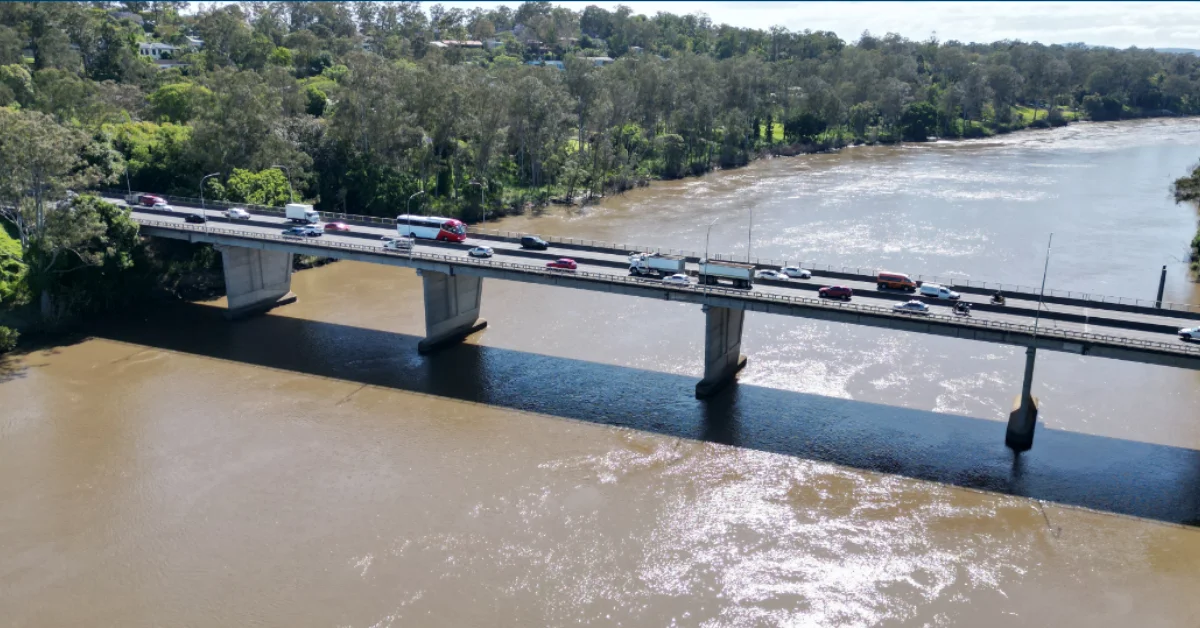
New Centenary Bridge Opens to Traffic in Jindalee

The new northbound Centenary Bridge in Jindalee has opened to traffic, marking a major milestone in the multi-year upgrade of the river crossing on the Centenary Motorway.


Background on the Centenary Bridge Upgrade

The new northbound Centenary Bridge in Jindalee has opened to traffic, marking a major step in the multi-year upgrade to the Brisbane River crossing. The shift onto the new structure began today as part of a staged traffic switch that will allow rehabilitation works to begin on the existing bridge.

Construction began in early 2023 after the award of the main contract in December 2022, and the full upgrade is expected to be completed in 2027.

The project will expand the crossing from four to six lanes by introducing a new three-lane northbound bridge and converting the existing structures into a three-lane southbound bridge.
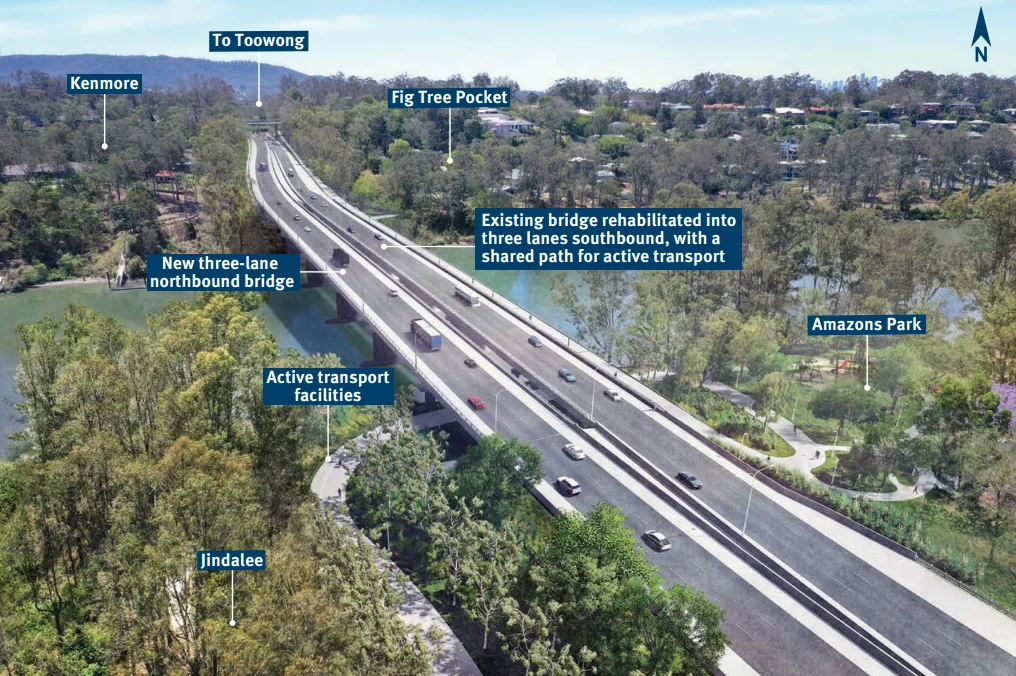
Centenary Bridge Upgrade
Photo Credit: QLD Gov

Project Scope and Key Features in Jindalee

The upgrade includes longer and safer entry and exit ramps, improvements to active transport connections, and better links to the Western Freeway Bikeway. The Jindalee Skate Park and Amazons Place Park remain in place under the current design.

The new separated active transport path is planned to be about 5 metres wide, with increased physical separation between pedestrians, cyclists, and motorway traffic. Additional shared path upgrades will occur under the bridge and towards Sinnamon Road.

Jindalee Traffic Changes

More than 85,000 vehicles use the Centenary Bridge each day. Current traffic modelling shows daily demand may reach around 152,000 vehicles by 2036.

Temporary speed limits and changed traffic conditions will remain throughout construction. The permanent 80 km/h speed limit will return once works are completed.
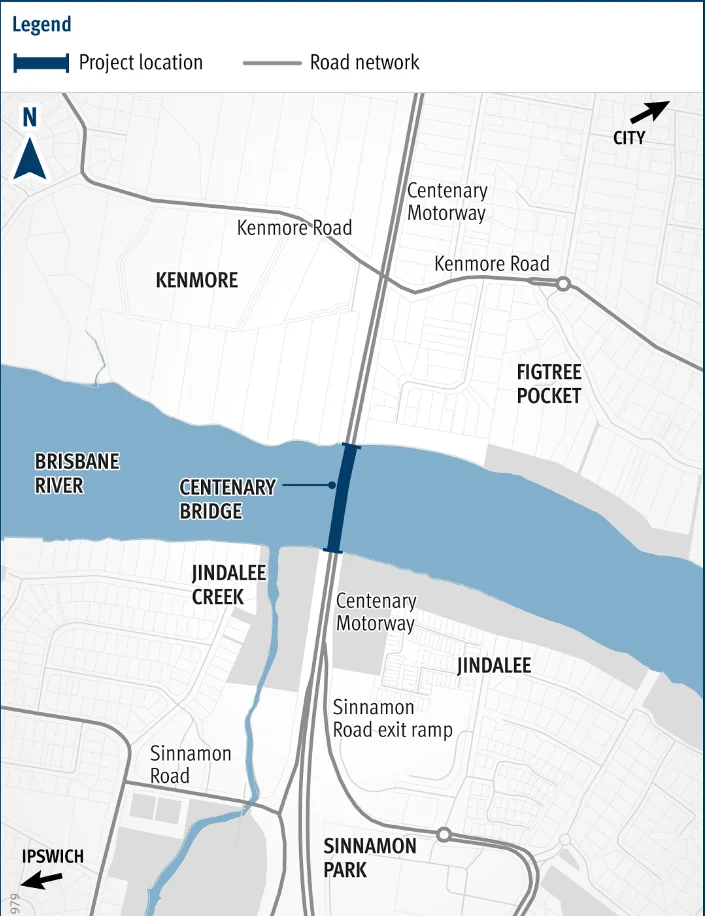
Centenary Motorway
Photo Credit: QLD Gov

Benefits for the Jindalee Corridor

The upgrade aims to improve safety, increase capacity, and enhance travel-time reliability. Longer merge lanes, updated road surfaces and wider shoulders form part of the configuration.

The bridge upgrade also supports future stages of the broader Centenary Motorway Upgrade, which may include additional improvements along the corridor between Darra and Toowong.

Active Transport and Local Connectivity

Pedestrians will be positioned closest to the river, while cyclists will have a wider lane on the inside. The Spinkbrae Street shared path will remain, with temporary detours during construction.

Lighting upgrades and new path alignments will be delivered in the Sinnamon Road area, while access will be maintained as works progress.

Next Steps for the Jindalee Upgrade


Rehabilitation of the existing bridges will continue, along with ongoing works on vegetation, environmental management, and local access improvements. The project team will continue issuing traffic updates and notifications as work advances.

Published 6-Dec-2025
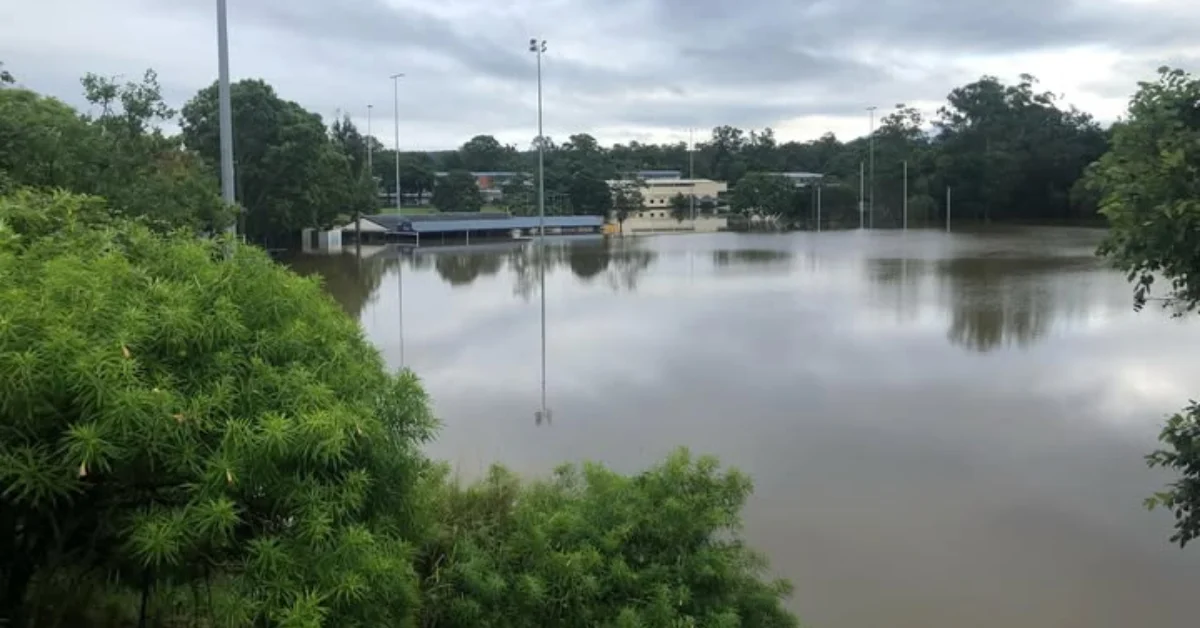
New Creek Flood Study Changes Risk Profile For Jindalee Homes

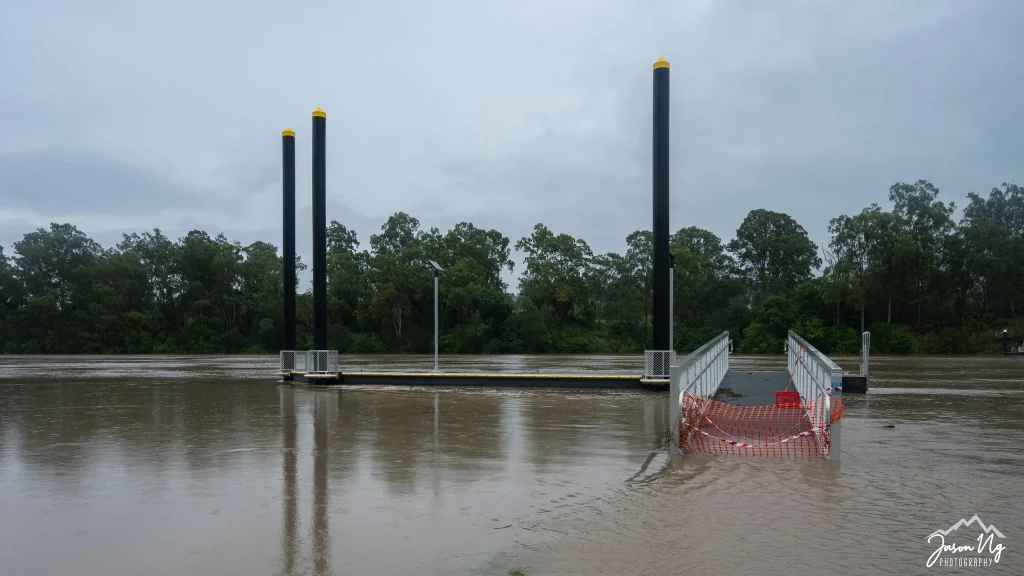
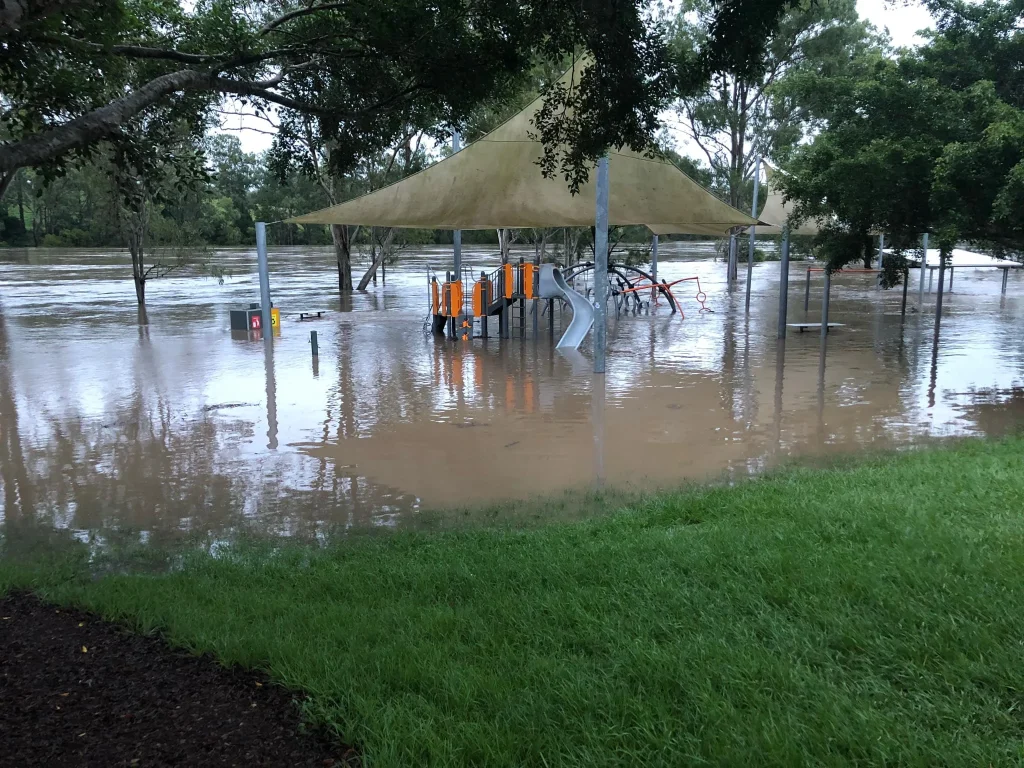
A number of homes in the Jindalee flood catchment area would be among thousands across Brisbane to be added to a revised flood risk map after new creek catchment studies reshaped hazard zones.


Focus On Creeks, Not The River

Thousands of residents will soon see their properties listed on Brisbane City Council’s updated flood risk map after new studies identified more homes at risk from creek and waterway flooding. Some households will appear on the overlay for the first time, while others will have their risk category changed. 

The update, based on studies of the Jindalee, Breakfast Creek, and Lota Creek catchments, will be added to the City Plan on 19 September 2025. Citywide, 17,246 properties are affected, with 10,129 newly listed, about 2,000 upgraded to higher risk, and more than 400 removed.

The Jindalee flood catchment includes the suburbs of Jindalee, Sinnamon Park, and sections of Middle Park. These suburbs are prone to flooding because they sit within the Brisbane River catchment and its tributaries.

Photo Credit: CrSarahHutton/Facebook

What This Means For Property Owners

The updated flood overlay covers only creek and waterway flooding, not Brisbane River or overland flow. In the Jindalee catchment, it reflects local creek systems rather than past river flood events, with scenarios ranging from common floods to rare 1-in-2,000-year events. 

Council will notify affected property owners before the changes, detailing whether their property is new to the map, has a revised risk, or has been removed. Once live, the online Flood Awareness Map will let residents view their risk and plan for preparation, renovations, or development.

Calls For Fair Treatment From Insurers

Council has urged insurers not to increase premiums unfairly as a result of the updated mapping, especially in cases where the flood event probability is very low. 

Photo Credit: CrSarahHutton/Facebook

In previous updates, some residents in other suburbs saw sharp rises in premiums, prompting concern in the community. The city’s message to insurers is to consider the context of the data and apply changes reasonably.

Part Of A Broader Flood Preparedness Program

The Jindalee study is part of a rolling program that has delivered 29 flood studies across Brisbane over the past decade. 


Each study feeds into Council’s planning scheme to improve community awareness and resilience. The aim is to provide accurate, location-specific flood risk information so residents can better prepare for the future.

Updated 28-November-2025

Platypus Populations Holding On in Wacol

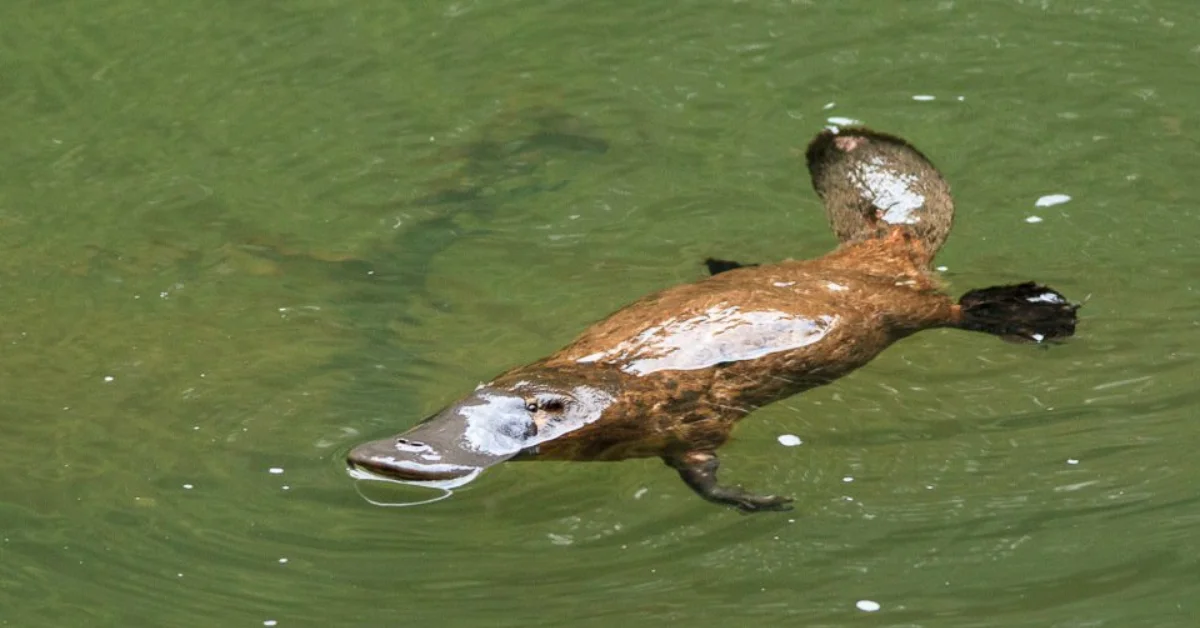
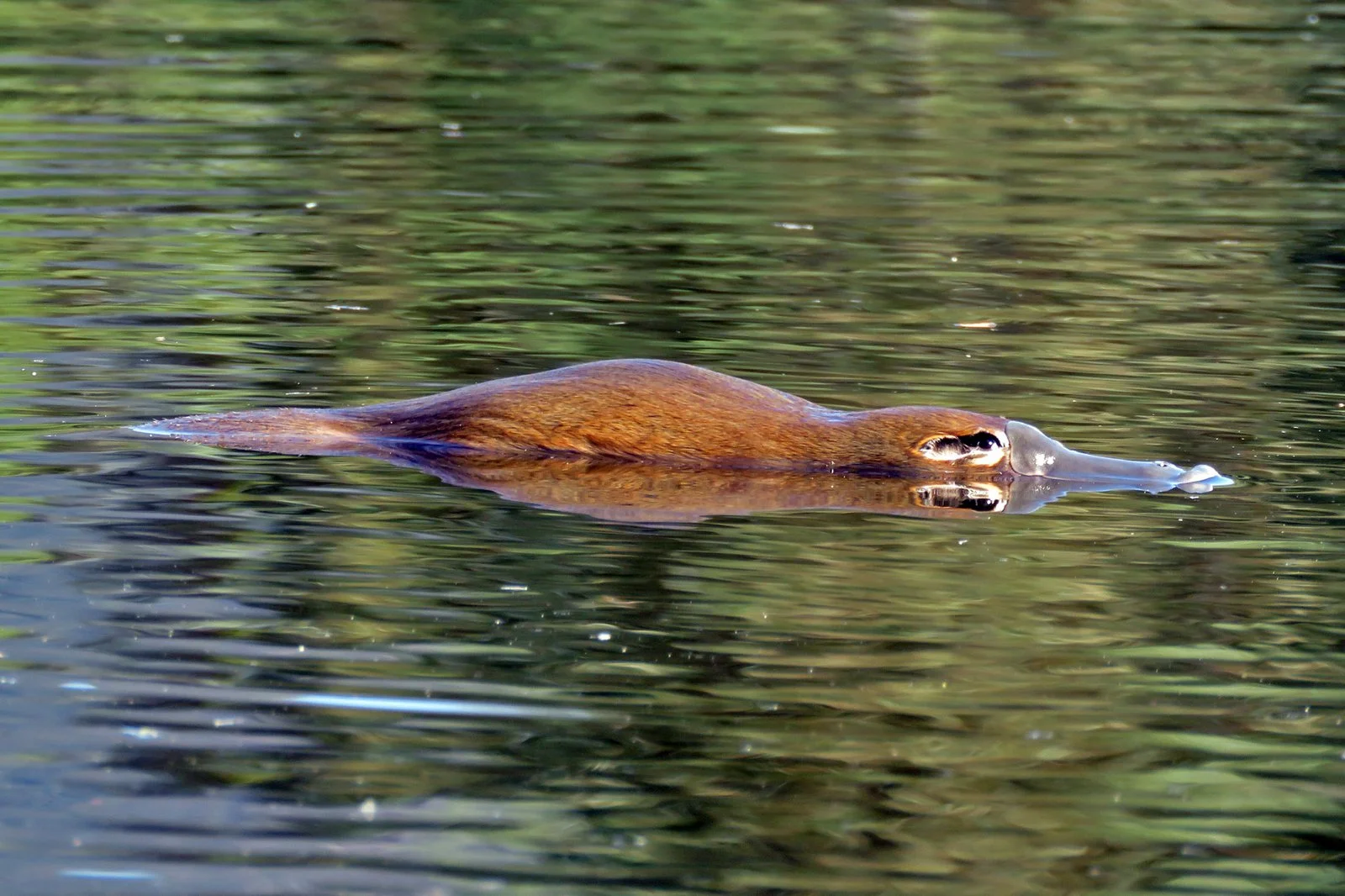
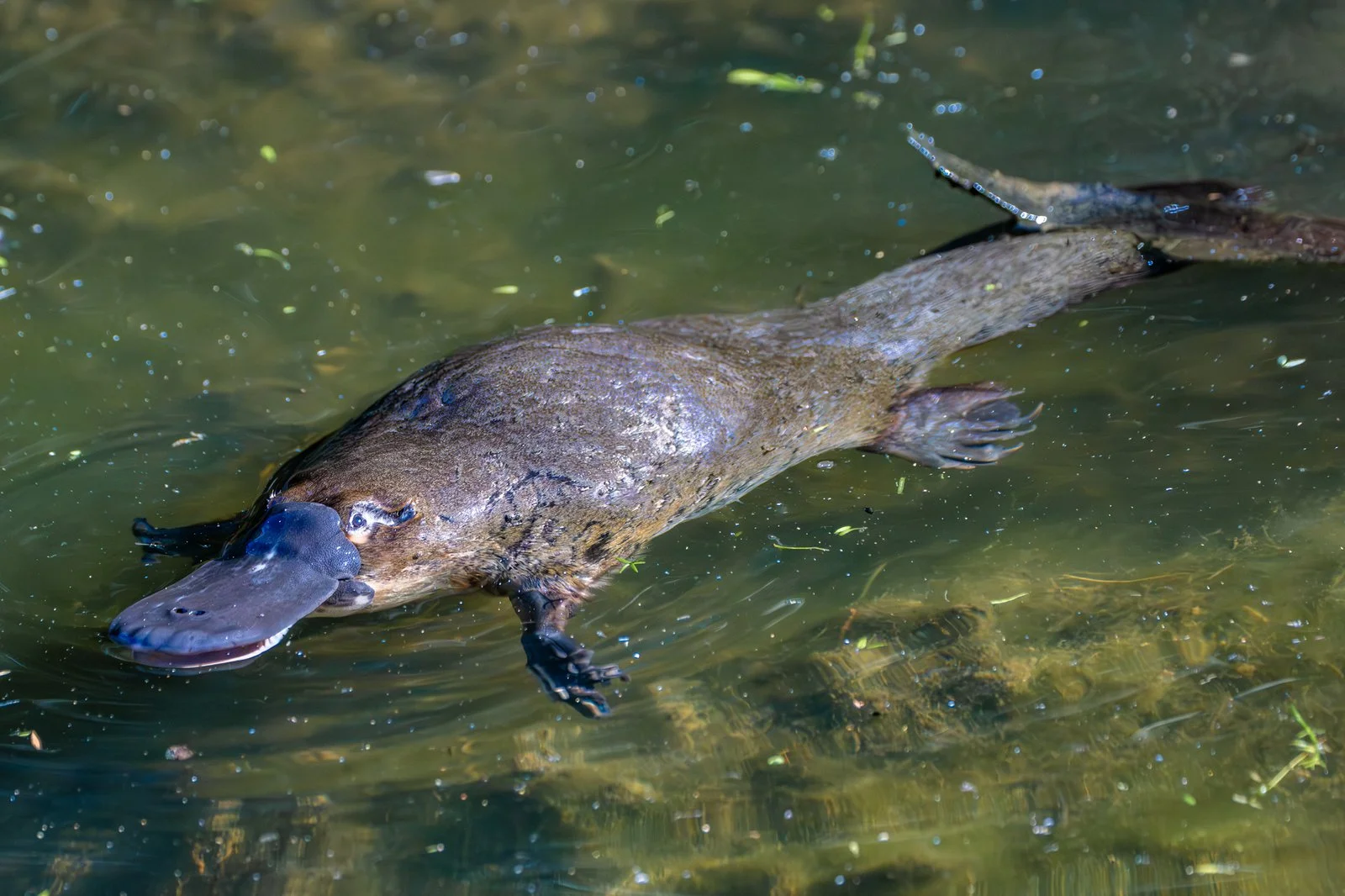
Recent monitoring has shown that platypus populations are still present in Wacol, with eDNA results confirming activity in the area as regional studies continue.


Background on Monitoring After the 2022 Floods

Platypus monitoring across Ipswich and surrounding waterways intensified after the 2022 floods raised concerns about severe population loss. In June 2022, early post-flood eDNA sampling across 22 known sites detected only one tentative positive sign at Wacol.

A follow-up survey in December 2022 produced similar results, indicating platypus had not yet returned to many Ipswich waterways. These findings highlighted the scale of habitat damage, including bank instability, sediment influx, and overall decline in water quality across creeks such as Woogaroo and Opossum.

eDNA program
Photo Credit: Australian Museum

Expanded Monitoring Across South East Queensland

From 2023 onward, eDNA sampling in the region continued under Ipswich City Council’s annual program. Results released in 2025 showed improvements, with multiple positive detections across Bundamba, Six Mile and Sandy creeks.

While some waterways recorded limited detections, Wacol remained significant as a location where platypus DNA had been consistently identified since the floods.

The broader regional effort now forms part of the $1.2 million Resilient Rivers SEQ program launched on 3 November 2025. The initiative spans more than 200 sites across Brisbane, Logan, Ipswich, Moreton Bay, Noosa and the Sunshine Coast, using eDNA to study species including platypus, rakali, freshwater turtles, lungfish, frogs and Mary River cod.

Habitat Pressures and Long-Term Challenges

Research outlined in previous monitoring reports identified ongoing habitat degradation as a major threat. Increased sediment loads, bank erosion and waterway connectivity issues continue to affect platypus burrows, which rely on stable, vegetated creek banks for survival.

The 2022 floods delivered sediment levels far above recommended objectives, contributing to the decline of known populations across Ipswich’s waterways.

Wacol platypus monitoring
Photo Credit: Australian Museum

Habitat Restoration Efforts in Wacol

In January 2025, a platypus habitat restoration project was launched at Bullockhead Creek in Wacol. The site is regarded as an important refuge for Brisbane’s remaining platypus, with only 35 sightings reported across the city the previous year.

The project received $1.9 million in funding to rehabilitate 4.5 hectares of creek habitat. Key works include weed removal, habitat repair and revegetation using native species to stabilise banks and improve ecological conditions.

Ongoing research into platypus movements forms part of this strategy, supported by DNA sampling at 100 sites in Brisbane.

Community and Stakeholder Involvement

Local environmental groups and researchers have expressed support for the restoration work at Wacol. Community-led monitoring efforts such as PlatyCount continue to contribute data, complementing formal eDNA surveys undertaken across South East Queensland.

Outlook for Platypus Conservation in Wacol

Monitoring under the Resilient Rivers SEQ program will continue over the next two years, informing habitat restoration, waterway management and long-term biodiversity planning.


In Wacol, early-2025 restoration works are expected to improve local conditions, supporting the survival of remaining platypus populations and guiding future conservation efforts.

Updated 25-November-2025

Queensland Storm Leaves Flying Foxes Orphaned, RSPCA Responds

When a severe hailstorm hit the Queensland town of Esk, rescuers arranged for almost 120 injured flying foxes to be taken to the RSPCA Wildlife Hospital in Wacol, many suffering smashed faces and broken wings. Volunteers helped rescue the animals after they were battered by giant hailstones, some larger than cricket balls.


Storm Impact Across Queensland

Over the weekend, days of severe thunderstorms impacted the east coast of central and southern Queensland, bringing intense rain, damaging winds and giant hail. According to the Bureau of Meteorology, hailstones up to 10 centimetres in diameter were reported in numerous locations, including Esk, where a local flying fox colony suffered heavy injuries.

Volunteers from Bat Conservation and Rescue Queensland and other vaccinated wildlife carers collected injured bats from the ground and trees before transporting them to RSPCA Wacol for treatment. David Zammit, an Esk local and RSPCA animal rescue officer, said carers vaccinated against Australian bat lyssavirus worked together to gather the injured animals. He said the hailstorm injured both adult and juvenile bats, including black, little red and grey-headed flying foxes. The event left around 60 pups orphaned on Saturday night, many of them very young.

Inside the Wacol Wildlife Hospital

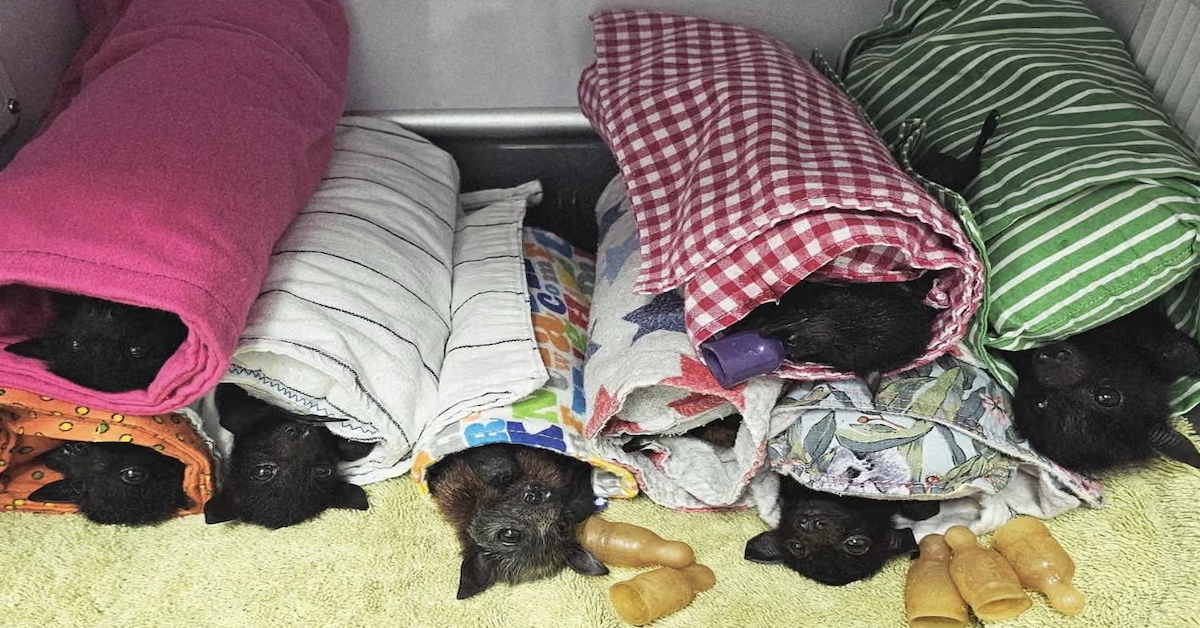
At the RSPCA Wildlife Hospital, veterinarians began triage immediately, warming the bats and providing fluids. Dr Emily Drayton, lead clinical vet at the facility, said the bats had suffered severe injuries consistent with hail impact. Most were euthanised because their injuries were too extensive for recovery. About eight adults and ten pups survived and are now being hand-reared.

Wildlife carers are using teats coated in glucose gel to feed the pups, as many arrive with low blood glucose. They are wrapped in blankets to stay warm and supported, helping them maintain a natural hanging position. Rehabilitation can take several months, with carers providing fluid therapy, pain relief and assisted feeding before the animals can be released back into the wild.

Community Guidance and Conservation Context

The RSPCA has urged residents not to handle sick, injured or orphaned bats. Because only vaccinated carers should handle them, people who find distressed flying foxes are advised to call a wildlife rescue service rather than attempt care themselves.

This incident shows how a single severe storm can devastate a flying fox colony in Queensland. While the Flying-Fox Roost Management Local Government Grants Program focuses on managing roost impacts and community concerns, it does not fund emergency wildlife rescue work like the response to this hailstorm.


At Wacol, carers are hand-rearing the surviving pups over several months so they can eventually be released back into the wild in Queensland.

Published 12-Nov-2025

Former Police Union Leader Ian Leavers Found Dead at Mount Ommaney Home

The Queensland Police Service is mourning the passing of Ian Leavers APM, who was found dead at a Mount Ommaney residence this morning.


Police were called to the address around 9.50am on Sunday, where Mr Leavers was located. Authorities have confirmed his death is not being treated as suspicious, with investigations continuing.

Mr Leavers held the position of Queensland Cross-Border Commissioner at the time of his death. He previously served as President of the Queensland Police Union of Employees for more than 15 years and was a former member of the Queensland Police Service.

Queensland Police Service Commissioner Steve Gollschewski APM paid tribute to Mr Leavers, acknowledging his significant contribution to the organisation and its members.

Commissioner Gollschewski said Mr Leavers led with dedication and purpose during his tenure as union president, building strong relationships across the service and advocating tirelessly for frontline officers.

The commissioner highlighted Mr Leavers’ role in introducing policy improvements and better working conditions for police members, particularly during challenging periods.

Mr Leavers’ death is expected to have a considerable impact across the police service and the wider community due to his longstanding connections and advocacy work.


Support services are available for anyone affected. Lifeline can be contacted on 13 11 14 or at www.lifeline.org.au, whilst Beyond Blue is available on 1300 22 4636 or at www.beyondblue.org.au.

Published 10-November-2025

Brisbane Awards 2025: How a Wacol Charity is Saving Two Lives at Once

A simple idea to bring foster dogs to visit lonely family members has grown into a Wacol-based national charity changing thousands of lives, both human and animal.


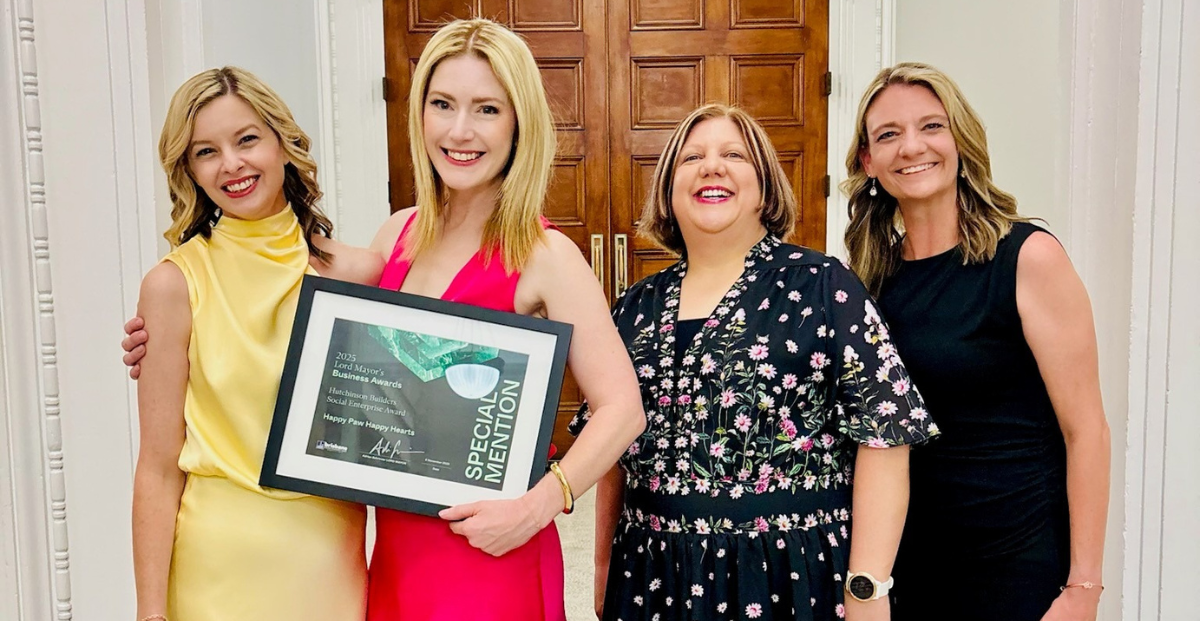
Happy Paws Happy Hearts (HPHH) has been honoured for its work, receiving a Special Mention for the Hutchinson Builders Social Enterprise award category at the 2025 Lord Mayor’s Business Awards. Help Enterprises took home the Social Enterprise Award.

The Lord Mayor’s Business Awards, now in their 20th year, celebrate the visionaries and innovators shaping Brisbane’s $200 billion economy. HPHH was named one of 44 finalists recognised for driving the city’s success.

A Mission to Heal Two Kinds of Hurt

The organisation was created to find a single solution for two major problems: the 1.1 million Australians experiencing social exclusion and the more than 124,000 animals waiting for adoption in shelters like the RSPCA every year.

Happy Paws Happy Hearts partners with animal shelters to create a safe space for vulnerable people. Participants join programs, both online and inside the shelters, where they share a love of animals, learn new skills, and give back to the community in a powerful way.

More Than Just a Pat

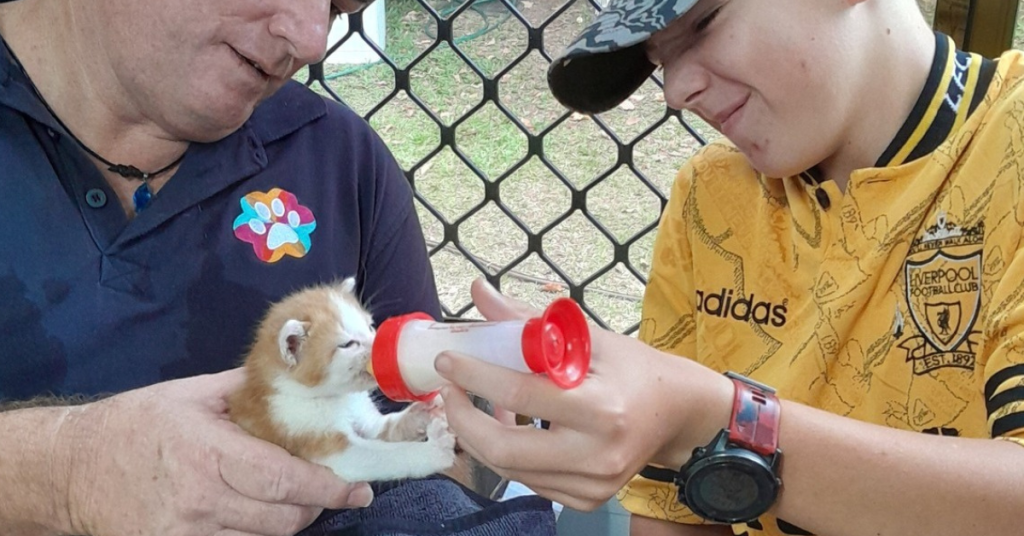
The organisation’s unique approach moves participants out of traditional training rooms and gives them “hands-on” opportunities to care for and train the rescue animals. This interaction provides a pathway for people to overcome their own emotional and physical isolation.

According to the organisation’s mission, this method helps rebuild confidence in stages and often results in a new outlook on life. It is a purposeful approach focused on achieving the best possible outcomes for both the people and the animals, helping to prepare the pets for their future adoptive homes.


A Simple Idea Grown Big

The national charity started from a simple observation. In 2014, co-founders Zoe and Grame brought their foster dogs to visit socially isolated family members. They witnessed an immediate connection, bringing smiles to faces and wags to tails.

From that first visit, Happy Paws Happy Hearts has expanded across Australia. It continues to craft programs that support both people and animals, backed by partners who help it reach more isolated individuals and provide much-needed human interaction for shelter animals.

Published Date 10-November-2025

Rightsizing, Not Downsizing: Finding More Life in Just the Right Space at Somerset Indooroopilly 

With average life expectancy now stretching into the mid-80s, many Australians are realising that the family home—once a symbol of success—can quietly become a source of work and worry.

Nearly three-quarters of over-75s still live in houses larger than they need, while about 30 per cent are considering a move that fits their lifestyle today rather than the one they built decades ago.

Those themes will be be at the heart of Coffee & Conversations on 12 November 2025, where locals can hear about Somerset Indooroopilly—a new village that allows locals to downsize in the area they know and love.

Photo Credit: Somerset Indooroopilly

Set beside the Indooroopilly Golf Club, Somerset is a series of light-filled apartments around shared gardens, terraces and a café rather than cul-de-sacs and fences. The aim is to make life simpler without making it smaller.

Designed by Cox Architecture and built by Woollam Constructions, the whole complex is shaped around the concept of rightsizing: a lifestyle that trades maintenance for meaning, routine for connection, and isolation for ease.

Photo Credit: Aura Holdings

The shift speaks to a broader cultural change. Retirement communities are no longer seen as endpoints but as extensions of an active life. Research shows residents in such settings are physically healthier, more socially engaged and report higher overall happiness than those ageing alone. It’s less about giving things up than gaining back time—the chance to travel, volunteer or just enjoy an unhurried morning coffee.

Research shows that residents of well-designed retirement villages are more active, more socially engaged and less likely to need hospital care than peers who continue living alone.

People living in retirement communities can experience a reduction in patterns of hospitalisations, have the potential to reduced need for GP visits, and can stay healthy living independently.

RLC Report Better Housing for Better Health

Increasingly, people are choosing communities that give them freedom and flexibility, not just a smaller footprint. In practice, that means more time spent walking, reading, travelling—or simply enjoying a catch-up with friends—without the endless to-do list that comes with a large property.

At Somerset, that philosophy is built into everyday life, capturing that balance through thoughtful design. Apartments open onto gardens and shared terraces; the café hums with conversation; and facilities like the pool, gym, and library encourage activity without pressure.

Photo Credit: Aura Holdings

Each home includes a 24-hour monitored EEVI system for peace of mind, while a Village Manager and Wellness Advisor ensure help is close by but never intrusive. “Knowing the place is managed, looked after and secure—that’s a big factor,” one resident said. “It’s lovely knowing you’re in a safe area, surrounded by good people.”

The community is pet-friendly, the gardens maintained, and the atmosphere quietly sociable. “Moving here gave me freedom,” said another resident. “I can just close the door and go.”

For many, that’s the essence of rightsizing—choosing a space that fits this stage of life as comfortably as the last one did. “When you make the choice sooner rather than later, you give yourself the gift of freedom and the chance to enjoy more of what matters,” Aura Director Mark Taylor said at a recent Somerset event.

Pictured (L-R) Somerset Residents: Elsie, Ross, Elaine and Iris Photo Credit: Aura Holdings

And for anyone curious, participating in Coffee & Conversations on 12 November 2025 offers the simplest introduction: a walk through the gardens, a cup of coffee, and a conversation about how less maintenance can make room for more living.

Aura Holdings is a Proud Promotional Partner of Brisbane Suburbs Online News

Published 6-November-2025

Locals Rush to Rescue Injured Wildlife After the Hail

As hail battered Brisbane’s west on Sunday, neighbours rallied online and urged one another to bring injured animals to Wacol, home to the RSPCA Queensland Wildlife Hospital and a lifeline for the city’s wildlife during emergencies.


Residents in suburbs including Brookfield, Karana Downs and Pullenvale reported rescuing lorikeets, possums and an ibis hurt in the storm, wrapping them in towels and contacting wildlife care groups for advice.

Photo Credit: Melanie White/4069 Community/Facebook

The storm on 26 October 2025 brought hailstones up to seven centimetres wide, causing major damage across Brisbane, Ipswich and the Gold Coast. While official reports focused on power outages and property losses, social media filled with calls for help for injured animals.

Locals were urged to take rescued wildlife to the RSPCA Queensland Wildlife Hospital in Wacol, which accepts drop-offs 24 hours a day.

Photo Credit: Katrina Row/4069 Community/Facebook

Locals Mobilise for Wildlife Care

The 4069 region — covering Brookfield, Kenmore and Pullenvale — became an informal command centre for wildlife emergencies. One resident posted about an injured lorikeet found on a deck, while another described an ibis unable to fly near a creek crossing. Offers of help and transport followed within minutes, with residents sharing the Wacol hospital address and hotline number.

Wildlife groups such as Wildcare Australia reminded residents not to attempt feeding injured animals but to keep them in a quiet, dark box until they could reach a professional carer.

Froggy Creek and Other Sanctuaries Feel the Impact

In Karana Downs, the small wildlife refuge Froggy Creek — part of the Land for Wildlife program — reported storm damage to nesting boxes and surrounding vegetation. The caretakers posted online that they were thinking of others with property damage and of displaced wildlife seeking food and shelter.

Further east, the Lone Pine Koala Sanctuary at Fig Tree Pocket confirmed on social media that it would remain closed on Monday, 27 October, due to storm damage. The post assured visitors that all animals are safe and well and thanked the public for their patience during cleanup efforts. The closure underscored how even well-established facilities were affected by the same wild weather that disrupted suburban wildlife.

A Reminder from the Past

Queensland has seen the toll severe hail can take on wildlife before. In October 2003, hailstones “the size of cricket balls” killed more than 100 birds and animals — including kangaroos, wallabies, pelicans and ibis — at the Currumbin Wildlife Sanctuary on the Gold Coast. According to an archived report, sanctuary staff described it as a sombre period as they worked to care for the injured and rebuild damaged enclosures.

That tragedy remains one of Australia’s starkest examples of how extreme weather can devastate native fauna. It serves as a reminder, two decades on, of why community rescue efforts and preparedness still matter.

Getting Help to the Right Place

The RSPCA Queensland Wildlife Hospital in Wacol remained the main drop-off point recommended by wildlife groups and community members. Volunteers reported multiple deliveries of injured birds and small mammals from suburbs affected by the storm.

Carers suggest residents prepare a simple wildlife emergency kit — a towel, gloves and a ventilated box — to safely transport animals after severe weather. Those who find injured wildlife can call 1300 ANIMAL (1300 264 625) for advice.


As cleanup continues, Brisbane’s western suburbs have shown that care for wildlife can be as instinctive as protecting one’s own home. Community posts and small acts of rescue proved that even amid chaos, compassion remains the city’s strongest force.

Published 27-Oct-2025

Rocks Riverside Promenade Welcomes Next Stop in Sofie Formica’s Walking Series

Radio host Sofie Formica will lead the next leg of her 100 Days of Walking campaign at Rocks Riverside Promenade in Seventeen Mile Rocks on 29 October. The community walk begins at 4:00 p.m., inviting residents to lace up their shoes and enjoy an easy riverside stroll along one of Brisbane’s most scenic pathways.


The walking initiative, supported by 4BC, encourages locals to take part in simple, daily movement while connecting with others in their neighbourhoods. Sofie said the walks are designed to get people away from screens and back into conversation, adding that each route highlights a different part of Brisbane’s natural beauty.

The Rocks Riverside Promenade stop follows successful gatherings at Kedron Brook, Wynnum and Berrinba Wetlands earlier in the series.

Exploring Rocks Riverside Promenade

Situated along the Brisbane River in Seventeen Mile Rocks, Rocks Riverside Promenade is part of the 26-hectare Rocks Riverside Park, a popular green space for walking, cycling and family picnics. The flat, paved trail stretches roughly six kilometres return, running beside landscaped gardens, open lawns and riverside lookouts.

Families often choose the park for its playgrounds, shaded areas and water-play zone, while fitness groups use the promenade for running and cycling.

Photo Credit: Screen capture from All Trails

One popular walking route in the area starts along the Brisbane River, on Turrbal land, commencing at Rocks Riverside Park and ending at Amazons Place Park.

A shared walkway makes up the paved esplanade, where people can take time to view the various flora and fauna along the river. Benches, picnic areas, toilets, and playgrounds share space with the walking path, along with some historical remnants of concreting and iron industrial sites that give people a glimpse of the history of the area.

According to Bicycle Queensland, the route is ideal for all fitness levels and is one of Brisbane’s most accessible riverside tracks. Its wide pathways and gentle gradients make it suitable for prams, wheelchairs and bikes.

People looking for a longer route can walk up the bushland ridge to the south-east of the park towards the Zig Zag trail, passing through eucalypt forest. The trail through the forest is well-formed but unpaved and generally suitable for wheeled transport. This route takes half an hour longer and is more challenging but people find the view worth it.

The Centenary Today local guide describes it as a community favourite for its safe, family-friendly environment and open river views — the perfect match for the welcoming spirit of Sofie’s walking series.

Encouraging Connection Through Movement

Sofie’s 100 Days of Walking project continues to attract growing participation from communities across Brisbane. Each week, new walkers join to share stories, enjoy local parks and rediscover the benefits of regular physical activity.

The Seventeen Mile Rocks event aims to bring together residents from across western Brisbane, reinforcing the campaign’s message that walking together can strengthen social ties and improve wellbeing.


Those wishing to take part in the October 29 event can find updates and information on 4BC’s website or through the station’s Facebook page. Participation is free and open to all ages, with no registration required.

Published 22-Oct-2025

Centenary Community Clubs Set For Solar Energy Upgrades

Centenary area clubs in Darra and Wacol are confirmed for new rooftop solar and efficiency upgrades to help reduce electricity costs.


Centenary Sites Confirmed For Upgrades

The program was announced in early October 2025 and will be delivered across the 2025–26 financial year. Confirmed recipients include the Scouts Association – West Centenary site in Darra, the Western Districts Baseball Club at Atthows Park on Sumners Road in Darra, and the Taringa Rovers facility operating from a Wacol address on Grindle Road. 

Photo Credit: Taringa Rovers/Google Maps

Each will receive new solar infrastructure ranging from around 6 kW to more than 18 kW in size. These upgrades are part of a wider rollout across 26 Brisbane community facilities in the current stage.

Program Aims To Lower Costs For Local Families

Brisbane City Council has stated the initiative is focused on easing cost pressures for families and volunteer-run community groups. Savings generated from lower power bills are expected to be redirected to programs, facility maintenance, and member services. 

Photo Credit: Western Districts Baseball Club/Google Maps

Brisbane Sustainability Agency provided statements supporting the program, which aligns with Council’s emissions reduction strategy.

Part Of A Broader Clean Energy Rollout

Council has already installed more than seven megawatts of solar capacity across its facilities, with the total set to reach 7.5 megawatts after this stage is complete. The city has a target of cutting its carbon emissions by 30 per cent by 2031–32. 

Photo Credit: Canva / For Illustration Purpose Only

Council has framed the initiative as both an environmental and community cost-of-living measure rather than a political announcement.

Direct Local Relevance To Centenary Residents

With Darra and Wacol sites in the rollout, Centenary-area clubs such as Scouts and local sports will see neighbourhood-level benefits. 


These organisations are expected to see immediate improvements in operating costs once the systems are switched on, reinforcing Council’s focus on helping grassroots clubs remain sustainable.

Published 20-October-2025